Small Living Room Decor Ideas
A small living room can still feel comfortable, stylish and inviting. The key is to use the available space carefully, avoid unnecessary clutter and choose furniture and decor that make the room feel open rather than crowded.
You do not need an expensive renovation to improve a small living room. Simple changes in furniture placement, lighting, storage and color can make a noticeable difference.
Start with a Simple Layout
Before buying new furniture or decorations, look at the room as a whole.
Think about:
- where people normally sit
- how they move through the room
- where natural light enters
- which areas feel crowded
- which furniture pieces are used most often
A clear layout can make even a small room feel more organized.
Try to keep the main walking paths open and avoid placing large furniture where it blocks movement.
Choose Furniture That Fits the Room
Oversized furniture can quickly make a small living room feel cramped.
Instead of choosing the largest sofa possible, look for pieces that fit comfortably without dominating the room.
Furniture with slimmer arms, raised legs and lighter visual weight can help the room feel more open.
You do not need to use tiny furniture. The goal is simply to choose proportions that suit the space.
Avoid Too Many Furniture Pieces
A small room can become crowded when every available corner contains a chair, table or cabinet.
Ask yourself which pieces are actually necessary.
For many small living rooms, the basics may include:
- a sofa
- one additional chair
- a coffee table
- a small side table
- practical storage
Removing unnecessary furniture can create more breathing room.
Use Light Colors Carefully
Light colors can help a room feel brighter and more open.
Soft shades such as:
- warm white
- cream
- light beige
- pale gray
- soft sage
can work well on walls and larger surfaces.
You do not need to make everything white. Adding warmer natural tones can prevent the room from feeling cold or empty.
Add Color Through Smaller Details
If you enjoy stronger colors, use them through smaller decorative elements.
For example:
- cushions
- throws
- artwork
- plant pots
- small accessories
This allows you to introduce personality without visually overwhelming the room.
Use Mirrors to Reflect Light
A mirror can be useful in a small living room because it reflects both light and the surrounding space.
Place a mirror where it can reflect natural light from a window when possible.
One medium or large mirror often creates a cleaner look than several small mirrors placed randomly around the room.
Make Use of Natural Light
Natural light can make a small room feel much larger.
Avoid blocking windows with bulky furniture or heavy objects.
If privacy is not an issue, lighter curtains can allow more daylight to enter the room.
Keeping the area around the window visually simple can also help the space feel more open.
Layer Your Lighting
A single ceiling light may not be enough to create a comfortable atmosphere.
Consider combining several types of lighting, such as:
- ceiling lighting
- floor lamps
- table lamps
- wall lights
Using several smaller light sources can make the room feel warmer and more flexible, especially in the evening.
Choose a Practical Coffee Table
A large coffee table can take up valuable floor space.
For a smaller room, consider:
- a compact coffee table
- nesting tables
- a small round table
- an ottoman with storage
Round or oval tables can also make movement easier because they do not have sharp corners extending into narrow pathways.
Use Vertical Space
When floor space is limited, look upward.
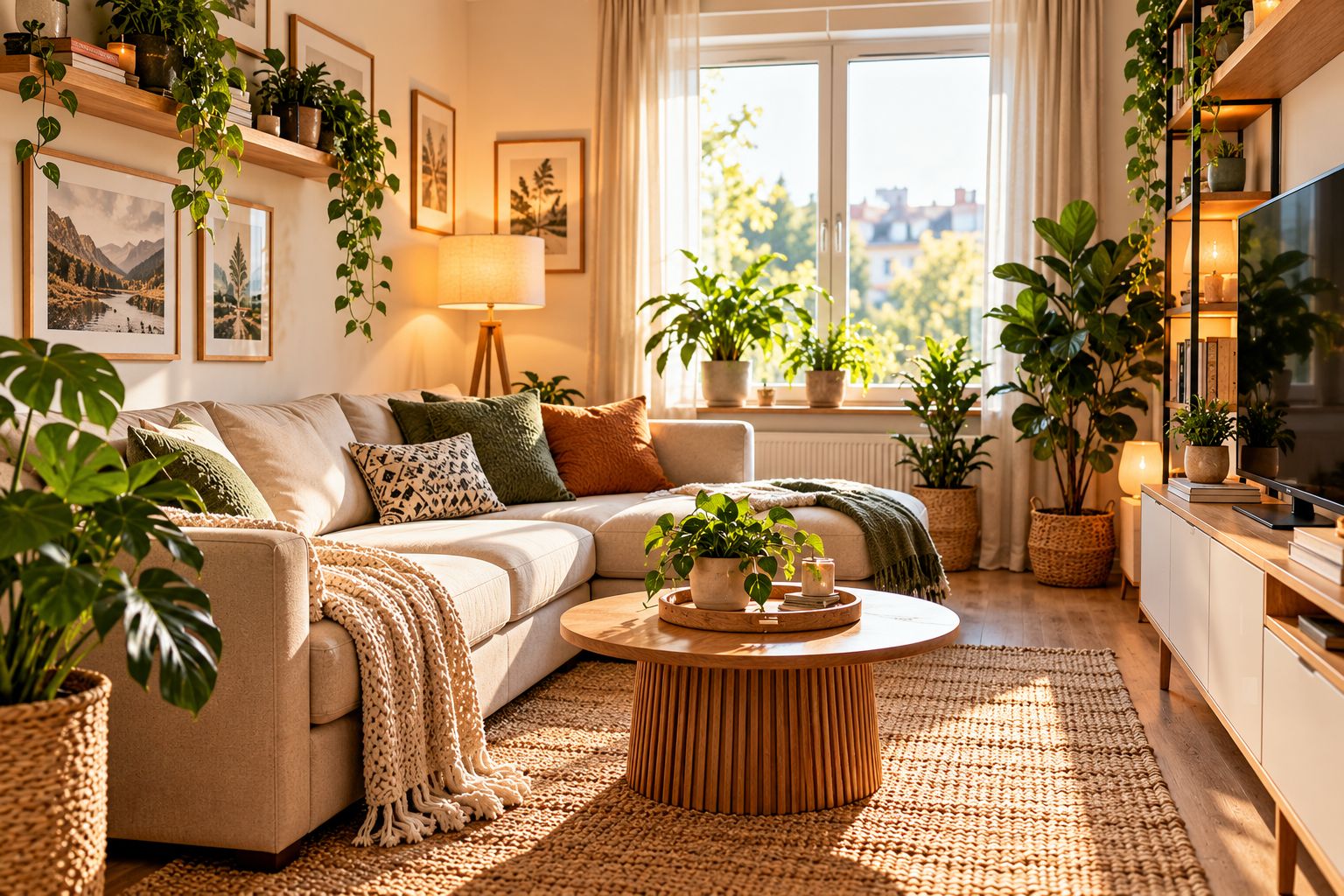
Wall-mounted shelves can provide useful storage without taking up additional floor space.
Use them for:
- books
- small plants
- framed photos
- decorative objects
Avoid filling every shelf completely. Leaving some open space can make the display look calmer.
Keep Shelves Organized
Open shelving can look attractive, but it can also make a room feel cluttered if too many items are displayed.
Choose a smaller number of meaningful or useful objects.
Try grouping similar items together rather than spreading many unrelated objects across every shelf.
Add Plants Without Overcrowding the Room
Indoor plants can make a living room feel warmer and more natural.
In a small space, choose plants that fit the available area.
For example:
- one taller floor plant
- a small plant on a side table
- a trailing plant on a shelf
You do not need dozens of plants to create a welcoming atmosphere.
Use Multi-Purpose Furniture
Furniture that serves more than one purpose can be especially useful in a small living room.
Examples include:
- storage ottomans
- coffee tables with drawers
- benches with storage
- side tables with shelves
- sofa beds
This can reduce the need for additional storage furniture.
Keep the Floor Visible
The more visible floor area you have, the more open the room can feel.
Furniture with raised legs can help because you can see underneath it.
This small visual detail can make sofas, chairs and cabinets appear lighter in the room.
Choose the Right Rug Size
A rug can help define the seating area, but choosing one that is too small can make the furniture look disconnected.
When possible, choose a rug large enough for at least the front legs of the main seating pieces to rest on it.
A simple rug in a neutral or subtle pattern can add warmth without making the room feel busy.
Avoid Too Many Small Decorations
A large number of small decorative objects can make a small room feel cluttered.
Instead, choose fewer pieces with more visual impact.
For example, one larger piece of artwork may create a cleaner look than many very small frames covering the wall.
Create One Main Focal Point
Giving the room one clear focal point can make the decor feel more organized.
The focal point could be:
- artwork
- a fireplace
- a large window
- a feature wall
- a media unit
Other elements in the room can then support that main feature rather than competing for attention.
Keep the TV Area Simple
If your living room includes a television, avoid surrounding it with too many objects.
A simple console or wall-mounted unit can keep the area visually clean.
Store cables, remotes and accessories so they do not become part of the visual clutter.
Hide Everyday Clutter
Small living rooms can look messy very quickly when everyday objects are left out.
Use baskets, drawers or closed storage for things such as:
- remote controls
- chargers
- magazines
- children’s toys
- small electronics
Easy-to-access storage makes it more likely that these items will actually be put away.
Use Curtains to Add Height
Curtains can influence how tall a room appears.
Hanging the curtain rod slightly above the window frame can draw the eye upward.
Long curtains that reach close to the floor can also create a more finished appearance.
Keep the fabric relatively simple if the room already contains several patterns or colors.
Do Not Push Every Piece Against the Wall
It may seem logical to push all furniture against the walls in a small room, but this is not always necessary.
Even moving a sofa or chair slightly away from the wall can sometimes create a more intentional layout.
Experiment with the room before deciding on the final arrangement.
Use Corners Wisely
Corners can provide useful space without interfering with the main living area.
A corner might be suitable for:
- a floor lamp
- a tall plant
- a small reading chair
- a narrow shelf
Try to give each corner a purpose rather than filling it simply because it is empty.
Keep a Consistent Color Palette
Too many unrelated colors can make a small living room feel visually busy.
Choose a simple palette of two or three main colors and repeat them throughout the room.
For example:
Warm white + sage green + natural wood
or:
Cream + beige + soft blue
Repeating colors can make the room feel more connected.
Mix Textures for Warmth
A small room does not need many decorative objects if you use different textures.
You can create interest with:
- woven baskets
- linen curtains
- soft cushions
- wooden furniture
- knitted throws
- textured rugs
This adds depth without creating unnecessary clutter.
Leave Some Empty Space
One of the easiest decorating mistakes is trying to fill every wall, shelf and corner.
Empty space is useful.
It allows individual furniture and decor pieces to stand out and can make the room feel calmer.
Do not feel that every empty area needs decoration.
Review the Room from the Entrance
Stand at the doorway and look at the room as a visitor would see it.
Ask yourself:
- Does the room feel easy to enter?
- Is there a clear path through it?
- Does anything block the view?
- Is one area noticeably overcrowded?
This perspective can help you notice layout problems that are less obvious when you are already sitting inside the room.
Make Small Changes Before Buying More
Before purchasing new decor, try rearranging what you already own.
Moving a lamp, removing one piece of furniture or changing the position of a rug can sometimes improve the room more than adding something new.
This approach can also help you understand what the room actually needs.
Final Thoughts
Decorating a small living room is mostly about making thoughtful choices.
Choose furniture that fits the space, keep pathways open and avoid filling every surface with objects.
Good lighting, a simple color palette, useful storage and a few carefully chosen decorations can make even a compact living room feel comfortable and welcoming.
A small room does not need to look empty. It simply needs enough open space for the furniture, decor and people in it to feel balanced.