How to Declutter Your Bedroom Step by Step
A cluttered bedroom can make the entire space feel smaller, busier and less relaxing. The good news is that you do not need to reorganize everything in one day. Breaking the process into simple steps can make decluttering much easier and help you create a room that is more comfortable to use and easier to maintain.
The goal is not to create a perfectly styled bedroom. It is to remove what you no longer need, give useful items a clear place and make everyday tidying faster.
Start with One Small Area
Trying to declutter an entire bedroom at once can feel overwhelming.
Start with one small area, such as:
- one bedside table
- one drawer
- the top of a dresser
- one shelf
- a small section of the closet
Finishing one area gives you a quick result and makes it easier to continue.
Remove Obvious Trash First
Before making decisions about clothes, books or decorations, remove anything that is clearly trash.
Look for:
- empty packaging
- old receipts
- broken items
- unnecessary papers
- empty bottles
- worn-out packaging
This is one of the fastest ways to make the room look cleaner.
Clear the Floor
A clear floor can immediately make a bedroom feel larger.
Pick up clothes, shoes, bags and other objects from the floor.
Do not simply move everything onto the bed. Put items into simple groups so you can decide what to do with them later.
For example:
Keep
Move to Another Room
Donate
Discard
Make the Bed
Making the bed gives you a clean visual starting point.
It also creates a useful surface where you can temporarily place items while sorting them.
Try not to cover the entire bed with belongings. Work with small groups so the process stays manageable.
Declutter Your Bedside Table
Bedside tables often collect small items very quickly.
Remove everything and decide what actually needs to stay there.
For many people, the essentials might include:
- a lamp
- a book
- a phone charger
- a glass of water
- one or two personal items
Move anything that belongs somewhere else.
Keeping the surface relatively clear can make the bedroom feel calmer.
Sort Your Clothes
Clothing is often one of the biggest sources of bedroom clutter.
Go through your clothes in manageable sections instead of emptying the entire closet at once.
Ask yourself:
- Do I still wear this?
- Does it fit comfortably?
- Is it damaged?
- Do I own several similar items?
- Would I choose to wear it again?
Keep the clothes you regularly use and consider donating items that are still in good condition but no longer suit your needs.
Organize Clothes by Type
Once you have decided what to keep, group similar clothes together.
For example:
- shirts
- trousers
- sweaters
- jackets
- sportswear
- sleepwear
This makes it easier to see what you own and helps prevent unnecessary purchases.
Use Drawers More Efficiently
Drawers can become cluttered when clothes and accessories are mixed together.
Assign each drawer a clear purpose.
For example:
one drawer for T-shirts, another for sleepwear and another for smaller clothing items.
Simple drawer dividers can also help keep smaller items separated.
Deal with the “Chair of Clothes”
Many bedrooms have a chair, bench or corner where clothes slowly accumulate.
Decide on a simple rule.
Clothes should either go:
- back into the closet
- into a laundry basket
- into a designated place for items that will be worn again
Avoid allowing a chair to become permanent clothing storage.
Organize Shoes
Shoes can take up a surprising amount of space.
Keep the pairs you wear most often easy to reach.
Less frequently used shoes can be stored on a shelf, in boxes or in another suitable storage area.
If a pair is damaged beyond use or has not been worn for a very long time, consider whether it still needs to stay in the bedroom.
Declutter the Top of Your Dresser
A dresser can quickly become a collection point for random objects.
Remove everything from the surface and return only the items that belong there.
A simple dresser surface might include:
- a small lamp
- a tray for everyday accessories
- one decorative item
- a small plant
Leaving some empty space can make the room feel more organized.
Sort Books and Magazines
Books can add personality to a bedroom, but they can also create clutter when they are scattered around the room.
Keep the books you enjoy or plan to read.
Return books that belong elsewhere and recycle outdated magazines when appropriate.
Arrange the remaining books neatly on a shelf, bedside table or bookcase.
Reduce Decorative Clutter
Decorations can make a bedroom feel personal, but too many small objects can make surfaces look crowded.
You do not need to remove everything.
Choose a few items that you genuinely like and give them enough space to stand out.
The rest can be stored, moved to another room or donated.
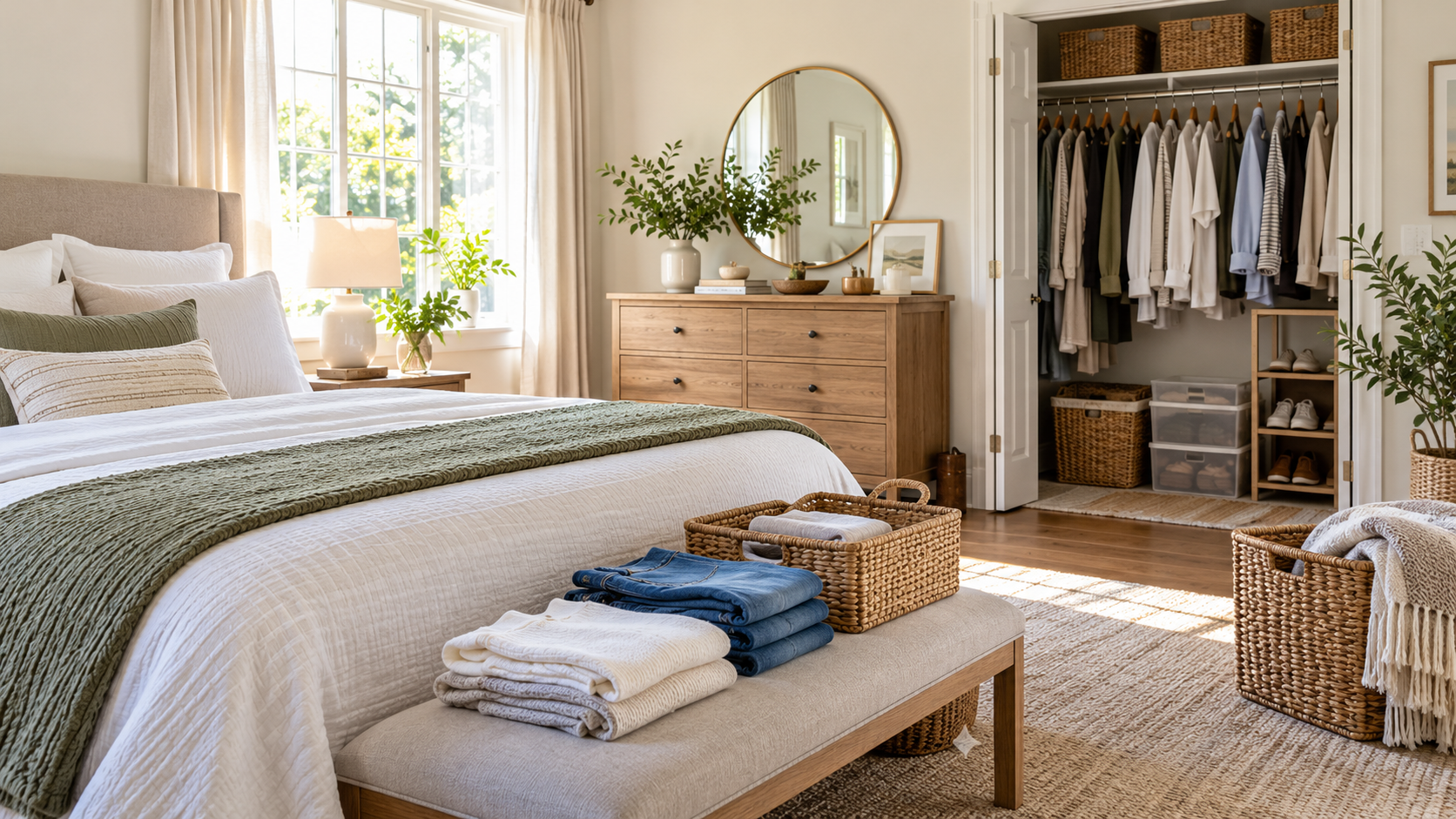
Use Baskets for Small Items
Baskets can be useful for items that are difficult to organize individually.
For example, they can hold:
- scarves
- small accessories
- charging cables
- notebooks
- personal care items
Use baskets only when they solve a real storage problem. Too many containers can become clutter themselves.
Check Under the Bed
Under-bed storage can be useful, but it can also become a place where forgotten items accumulate.
Remove everything and review what is stored there.
Keep only items that make sense to store in that space, such as seasonal clothing, spare bedding or occasionally used belongings.
Use suitable containers if needed so items stay organized and protected.
Create a Proper Laundry Area
Dirty clothes should have one clear destination.
Place a laundry basket somewhere convenient so clothes do not end up on the floor or furniture.
If possible, choose a basket that fits neatly into the room without blocking walkways.
Remove Items That Belong in Other Rooms
Bedrooms often collect objects that belong elsewhere in the home.
You may find:
- dishes
- paperwork
- household tools
- shopping bags
- children’s items
- electronics
Create a small pile and return each item to the correct room.
This simple step can free up a surprising amount of space.
Organize Cables and Chargers
Loose cables can make bedside tables and desks look untidy.
Keep only the chargers you regularly use in the bedroom.
Bundle or organize extra cables and store them in a designated place.
Avoid keeping broken or unidentified cables simply because they might be useful someday.
Keep Everyday Items Easy to Reach
Good organization should make your daily routine easier.
Store frequently used items where you can access them easily.
Items used only occasionally can be placed higher up, farther back or in less accessible storage spaces.
This prevents everyday areas from becoming overcrowded.
Create a Donation Box
Keeping a small donation box or bag somewhere convenient can make future decluttering easier.
When you find clothing or household items you no longer need, place them directly into the donation container.
Once it is full, take it to an appropriate donation location.
Clean While You Declutter
Once a surface or drawer is empty, take the opportunity to clean it before putting items back.
Wipe shelves, vacuum accessible areas and remove dust.
Decluttering and cleaning together can make the room feel noticeably fresher when you finish.
Avoid Buying Storage Too Early
It can be tempting to buy baskets, boxes and organizers before decluttering.
Try not to do this.
First decide what you are keeping.
Then measure the available space and choose storage only if it solves a specific problem.
Often, removing unnecessary items creates enough space without buying anything new.
Give Everything a Home
One of the easiest ways to prevent clutter from returning is to give every item a clear place.
When you know where something belongs, putting it away becomes much faster.
If an item has no obvious place, ask whether you really need to keep it.
Finish with a Quick Reset
At the end of the decluttering session, spend a few minutes resetting the room.
Put away remaining items, remove donation bags and take out any trash.
Then step back and look at the space.
Even small changes can make a bedroom feel much calmer and more comfortable.
Maintain the Bedroom with a Five-Minute Routine
Decluttering works best when you do not allow clutter to build up again.
A simple five-minute routine can include:
- making the bed
- putting clothes away
- clearing the floor
- returning items to their proper place
- removing cups or dishes
- clearing the bedside table
Doing a small amount regularly is often easier than repeating a large decluttering project every few months.
Final Thoughts
Decluttering a bedroom does not need to be complicated or stressful.
Start small, remove obvious clutter and work through the room one area at a time.
Focus on keeping the things you actually use and giving them a practical place to live.
A bedroom that is easier to maintain can feel more spacious, more comfortable and more relaxing without requiring expensive storage systems or a complete redesign.