How to Make a Small Bedroom Feel Bigger
A small bedroom can still feel comfortable, calm and stylish. The key is not necessarily adding more furniture or decoration, but making better use of the space you already have.
With thoughtful furniture placement, lighter colors, practical storage and a few visual tricks, even a compact bedroom can feel more open and easier to use.
The goal is not to make the room look empty. It is to create enough visual space so the bedroom feels balanced rather than crowded.
Start by Removing Unnecessary Clutter
Before changing the decor, remove anything that does not need to be in the room.
Look at:
- bedside tables
- dressers
- chairs
- floors
- shelves
- the space under the bed
A room immediately feels larger when surfaces and walkways are clear.
You do not need to remove everything. Keep the items you use and enjoy, but give them a clear place.
Choose Furniture That Fits the Room
Furniture that is too large can make a small bedroom feel even smaller.
Before buying anything new, measure the room carefully.
Consider the size of:
- the bed
- bedside tables
- dresser
- wardrobe
- chair
- storage furniture
Choose pieces that leave enough room to move comfortably around the space.
Avoid Too Many Furniture Pieces
A small bedroom can quickly become crowded when every available wall has furniture against it.
Ask whether every piece is necessary.
In many bedrooms, the essentials may simply be:
- bed
- bedside table
- clothing storage
- a small lamp
Removing one unnecessary chair, cabinet or table can sometimes make more difference than buying new decor.
Use Light Wall Colors
Light colors can help reflect natural light and make the room feel more open.
Popular choices include:
- warm white
- cream
- soft beige
- pale gray
- muted sage
- very light blue
You do not need to use pure white everywhere.
Soft, warm colors can still create an airy feeling while making the room feel comfortable.
Keep the Color Palette Simple
Too many strong colors can make a small bedroom feel visually busy.
Choose two or three main colors and repeat them throughout the room.
For example:
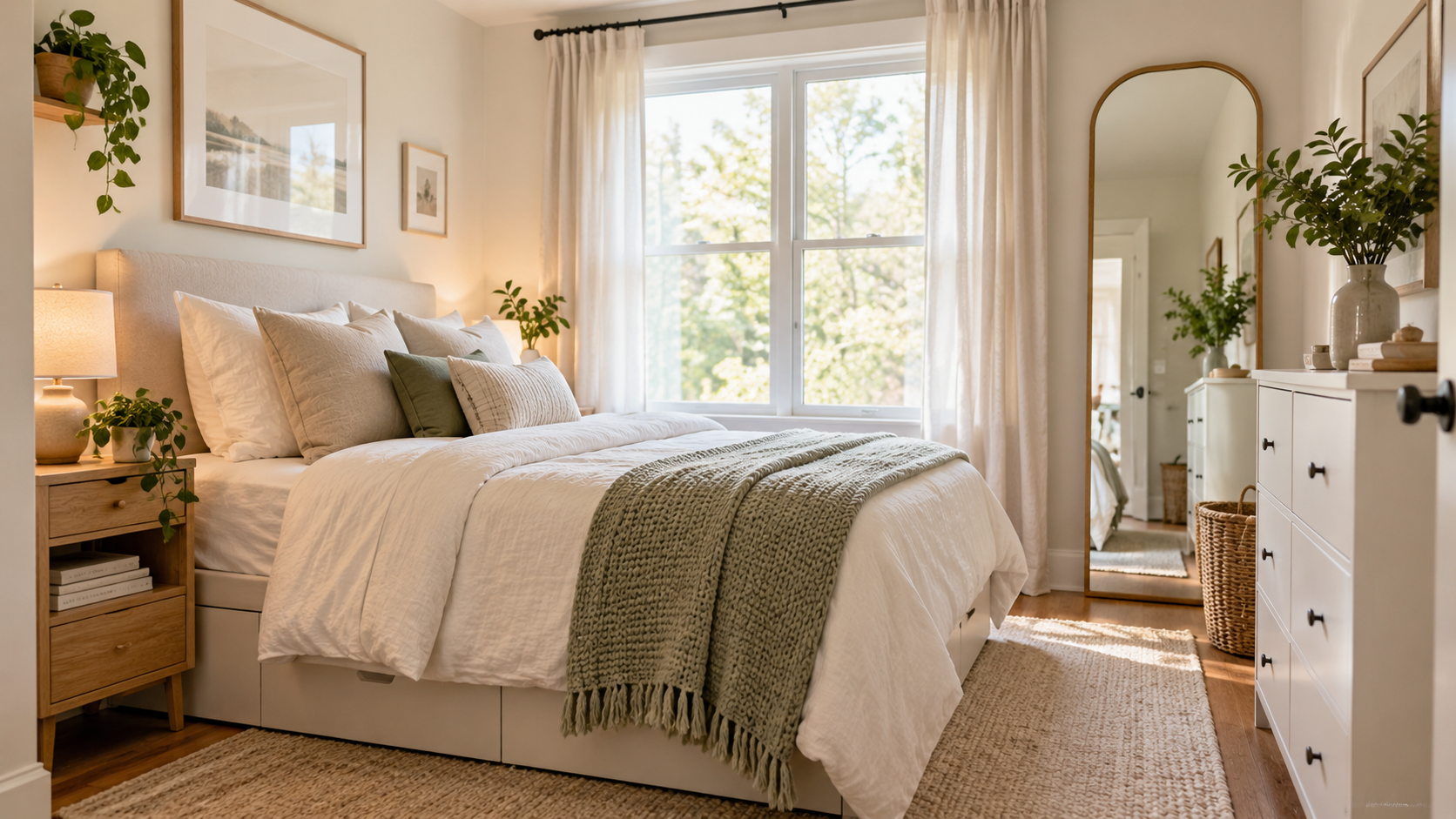
Warm white + sage green + natural wood
or:
Cream + beige + soft blue
A consistent palette helps the room feel more connected.
Make the Most of Natural Light
Natural light can make a small bedroom feel much larger.
Avoid blocking windows with tall furniture.
Use curtains that can be opened fully during the day.
Keeping window areas clear can help more daylight reach the room.
Use Light Curtains
Heavy curtains can sometimes make a small bedroom feel darker and more enclosed.
If privacy and room conditions allow, lighter curtains can create a softer and more open look.
Choose a fabric that still provides the privacy you need while allowing daylight to enter.
Hang Curtains Higher
Installing the curtain rod slightly above the window frame can make the ceiling appear taller.
Long curtains that reach close to the floor can also create a more polished appearance.
This simple visual trick can make the room feel more spacious.
Add a Mirror
A mirror can reflect both light and space.
A medium or large mirror can work well:
- above a dresser
- beside a wardrobe
- on an empty wall
- behind a bedroom door
Try placing the mirror where it can reflect natural light.
One well-positioned mirror often works better than many small mirrors.
Keep the Floor Visible
The more floor area you can see, the more open the room may feel.
Furniture with raised legs can help with this.
For example:
- bed frames with legs
- bedside tables with open bases
- lightweight chairs
- floating furniture
This creates more visual space under the furniture.
Consider a Bed with Storage
In a small bedroom, the bed takes up a large amount of space.
A bed with built-in storage can reduce the need for additional furniture.
You can use under-bed drawers or storage containers for:
- seasonal clothing
- spare bedding
- shoes
- less frequently used items
Keeping stored items out of sight can make the room feel calmer.
Keep Under-Bed Storage Organized
Under-bed storage is useful only if it stays organized.
Avoid pushing random objects underneath the bed.
Use boxes or containers that fit properly and label them if needed.
This makes it easier to find items later.
Use Vertical Space
When floor space is limited, use the walls.
Simple wall-mounted shelves can hold:
- books
- small plants
- framed photos
- lightweight storage baskets
This can reduce the need for extra floor-standing furniture.
Keep Shelves Simple
Too many items on open shelves can make the room feel cluttered.
Leave some empty space between objects.
A simple arrangement may include:
- a few books
- one small plant
- one framed photo
- a decorative object
Less can often look better in a small room.
Use Wall-Mounted Lighting
Bedside lamps can take up valuable table space.
Wall-mounted lamps or sconces can free up the bedside table.
This can be especially useful when bedside tables are narrow.
Always follow appropriate installation and electrical safety guidance.
Choose Smaller Bedside Tables
Large bedside tables are not always necessary.
A compact table may be enough for:
- phone
- lamp
- book
- glass of water
You can also consider wall-mounted bedside shelves if floor space is very limited.
Keep the Bed Area Simple
The bed is usually the largest visual element in the room.
Too many pillows, blankets and decorative layers can make the area look busy.
Choose a simple arrangement with:
- comfortable bedding
- a few pillows
- one throw if desired
A cleaner bed setup can make the entire room feel more open.
Use Similar Colors for Bedding and Walls
Bedding that is close in color to the walls can reduce visual contrast.
This can make the bed blend more naturally into the room.
You can still add interest through textures and a few accent colors.
Add Texture Instead of Too Many Patterns
Too many patterns can make a small bedroom feel crowded.
Instead, use texture.
For example:
- linen bedding
- woven baskets
- knitted throws
- wooden furniture
- soft rugs
Texture adds warmth without overwhelming the room.
Choose One Main Pattern
If you enjoy patterned decor, choose one main pattern.
It might appear on:
- cushions
- bedding
- curtains
- a small rug
Keep the rest of the room relatively simple so the pattern can stand out without making the space feel busy.
Use a Rug Carefully
A rug can make a bedroom feel warmer and more finished.
Choose a size that works with the bed and available floor space.
A rug that is too small can sometimes make the room feel more divided.
Position it so it visually connects the main furniture rather than creating another separate area.
Keep the Dresser Surface Clear
Dressers often become collection points for everyday items.
Try to keep only a few things on top.
For example:
- mirror
- small tray
- lamp
- one plant
Leaving some empty surface space can help the room feel less crowded.
Hide Small Everyday Items
Small items create visual clutter quickly.
Use drawers, boxes or baskets for:
- chargers
- cosmetics
- accessories
- notebooks
- personal items
Closed storage can make the room look cleaner without requiring you to own fewer useful items.
Avoid Too Many Decorations
A small bedroom does not need decoration on every wall and surface.
Choose a few items that you genuinely like.
For example:
- one larger artwork
- one plant
- a few framed photos
- a decorative lamp
This creates personality without filling every available space.
Use Larger Artwork Instead of Many Small Pieces
Many small frames can make a wall feel busy.
One medium or large artwork can create a cleaner focal point.
It can also help make the room feel more intentional.
Keep Doors and Walkways Clear
Furniture should not make it difficult to open:
- bedroom doors
- wardrobe doors
- drawers
- windows
Clear walking paths make the room easier to use and can also make it feel more spacious.
Use Corners Wisely
Corners can provide useful space without interfering with the room.
A corner may work well for:
- a tall plant
- narrow shelf
- floor lamp
- small chair
Avoid filling every corner just because space is available.
Choose One Focal Point
Giving the bedroom one main focal point can help reduce visual clutter.
The focal point could be:
- the bed
- artwork above the bed
- a feature wall
- a beautiful window
Other decor can support that focal point rather than competing with it.
Keep Technology Organized
Loose cables, chargers and devices can quickly make a bedside area look messy.
Use cable organizers where helpful.
Keep extra chargers and electronics in a drawer or basket.
A clean bedside area can make the entire room feel more peaceful.
Make the Bed Every Day
This may sound simple, but a made bed can immediately make a small bedroom look more organized.
Because the bed occupies a large portion of the room, its appearance has a strong effect on the overall space.
A tidy bed can make the room feel more finished in just a few minutes.
Use a Five-Minute Evening Reset
Before going to sleep, spend a few minutes resetting the room.
You might:
- put clothes away
- clear the floor
- organize the bedside table
- return items to drawers
- remove cups or dishes
This prevents clutter from slowly taking over the room again.
Review the Room from the Doorway
Stand at the entrance and look at the room.
Ask yourself:
- What is the first thing I notice?
- Does anything block the view?
- Does the room feel crowded?
- Are there too many items on display?
Seeing the bedroom from the doorway can help you identify areas that need simplifying.
Rearrange Before Buying New Furniture
Before purchasing anything new, try rearranging what you already own.
Moving the bed, dresser or bedside table may improve the layout without spending money.
Take measurements and experiment with different arrangements.
Sometimes a small change in position can make a surprisingly large difference.
Final Thoughts
A small bedroom can feel comfortable and spacious when the layout and decor are kept simple.
Focus on clear walking paths, furniture that fits the room, good natural light and practical storage.
Use a consistent color palette, reduce unnecessary clutter and leave some surfaces and walls open.
You do not need a large bedroom to create a relaxing space. Thoughtful choices can make even a compact room feel organized, calm and inviting.