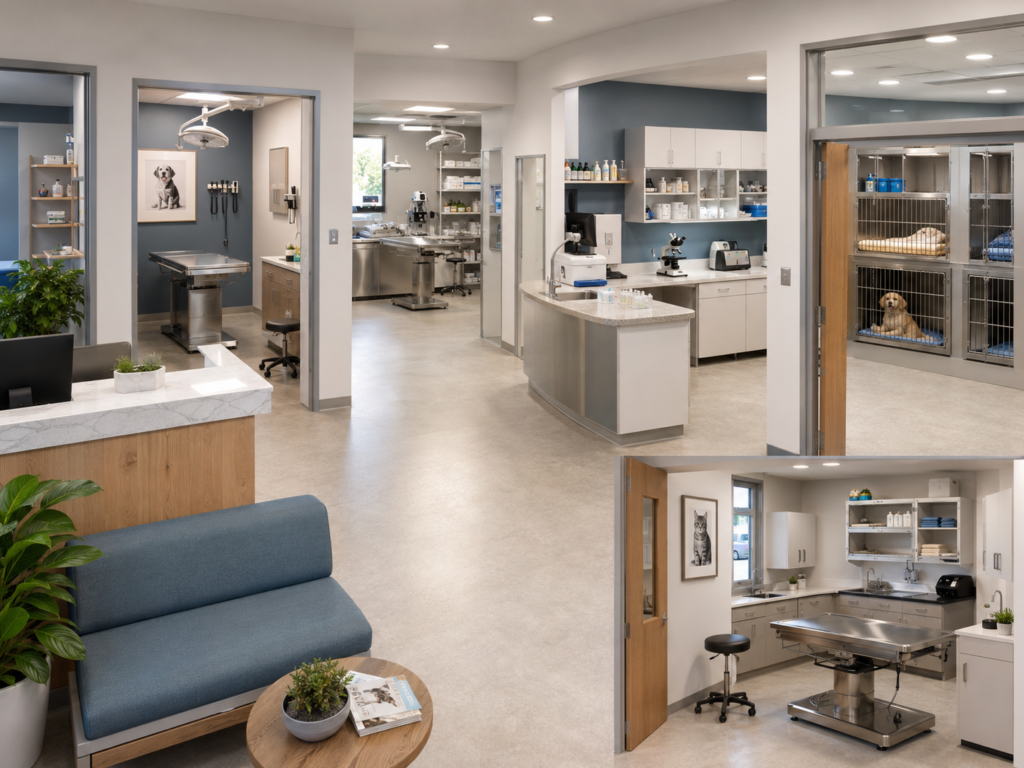
The reception and waiting area create the first impression of the veterinary clinic. They should feel welcoming while supporting safe animal movement, client privacy, appointment management, and infection control.
Recommended Reception Area Size
The space required depends on the number of daily appointments and expected peak occupancy.
General planning ranges include:
- 15–25 m², or 161–269 sq. ft., for a small clinic
- 25–45 m², or 269–484 sq. ft., for a medium-sized clinic
- 45 m² or more for a high-volume hospital or emergency center
A useful planning method is to provide enough seating for the maximum expected number of clients during peak appointment times, without forcing animals into close contact.
Reception Desk Dimensions
A reception counter may be approximately:
- 105–115 centimeters high at the standing section
- 74–76 centimeters high at an accessible seated section
- 60–80 centimeters deep, depending on equipment and storage
The desk should provide space for:
- Computers
- Telephone systems
- Payment terminals
- Label printers
- Appointment materials
- Secure document storage
- Client communication
- Medication or product collection, where appropriate
Computer screens and confidential information should not be easily visible to waiting clients.
Entrance and Circulation
The entrance should be easy to identify and protected from rain where possible.
The clinic should provide:
- Clear signs
- Non-slip entrance flooring
- Space for carriers and large dogs
- Accessible doorways
- Clear path to reception
- Safe distance from vehicle traffic
- Unobstructed emergency exit routes
Automatic or easy-open doors can improve access for people carrying animals.
Separate Waiting Zones
Where space permits, dogs and cats should have separate waiting zones.
A cat-friendly area may include:
- Raised shelves for carriers
- Visual barriers
- Quieter seating
- Greater distance from dogs
- Reduced foot traffic
A separate waiting or examination route should be available for animals suspected of having infectious diseases.
Seating and Furniture Materials
Furniture should be:
- Non-absorbent
- Scratch-resistant
- Easy to clean
- Stable
- Free from deep seams
- Resistant to moisture and disinfectants
Vinyl, coated healthcare fabrics, molded plastic, and sealed metal are generally easier to maintain than household fabric upholstery.
Flooring
The waiting area needs durable, non-slip flooring that tolerates:
- Urine
- Water
- Dirt
- Animal hair
- Scratches
- Frequent disinfection
- Heavy foot traffic
Commercial sheet vinyl, resin, porcelain tile with properly sealed joints, or veterinary-grade safety flooring may be appropriate.
Carpet should generally be avoided in animal waiting areas.
Walls and Interior Finishes
Lower wall areas should resist scratching, moisture, and impacts from carriers.
Suitable finishes include washable paint, hygienic panels, compact laminate, or sealed wall-protection systems.
Decorative materials should not create spaces that trap hair, dust, or moisture.
Ventilation and Odor Control
The reception area should have adequate fresh air and temperature control. Odors should be managed through cleaning and ventilation rather than strong fragrances.
Airflow from isolation rooms, kennels, or waste-storage areas should not enter the waiting room.
Client Information and Retail Display
Educational materials and veterinary products should be displayed without blocking circulation.
Products should be:
- Clearly priced
- Securely positioned
- Protected from animal access
- Kept away from direct sunlight
- Monitored for expiration dates
Cleaning Station
The reception team should have rapid access to:
- Disposable gloves
- Absorbent material
- Waste bags
- Appropriate disinfectant
- Warning signs
- Paper towels
Animal accidents should be cleaned immediately, while keeping clients away from wet or contaminated areas.