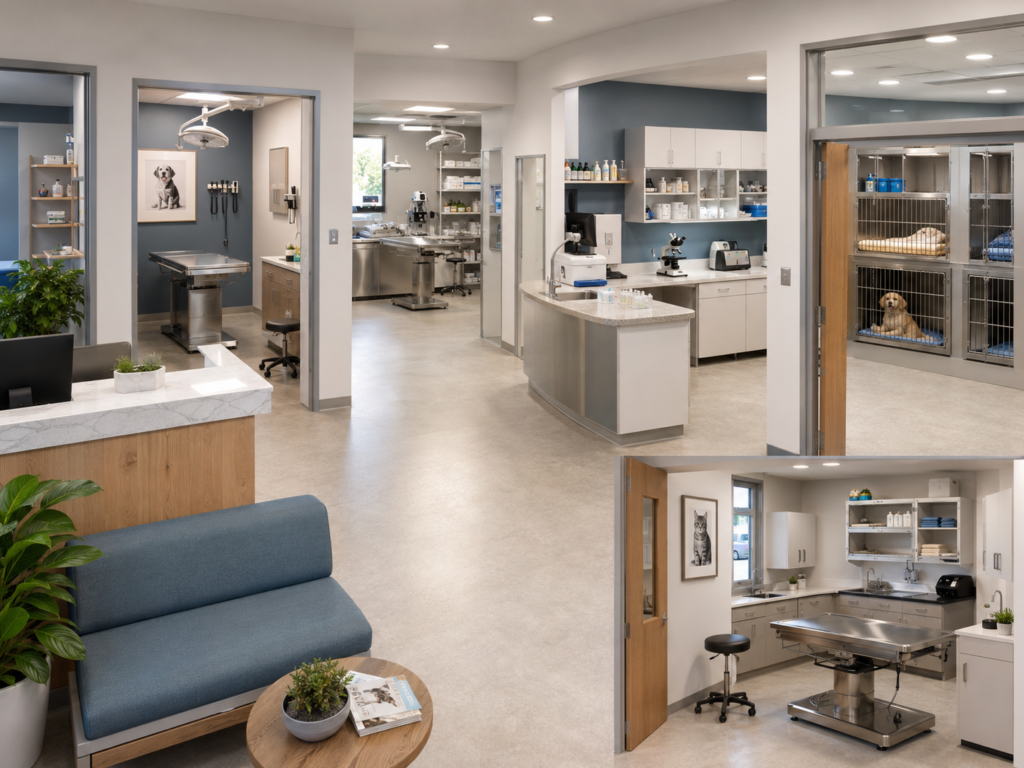
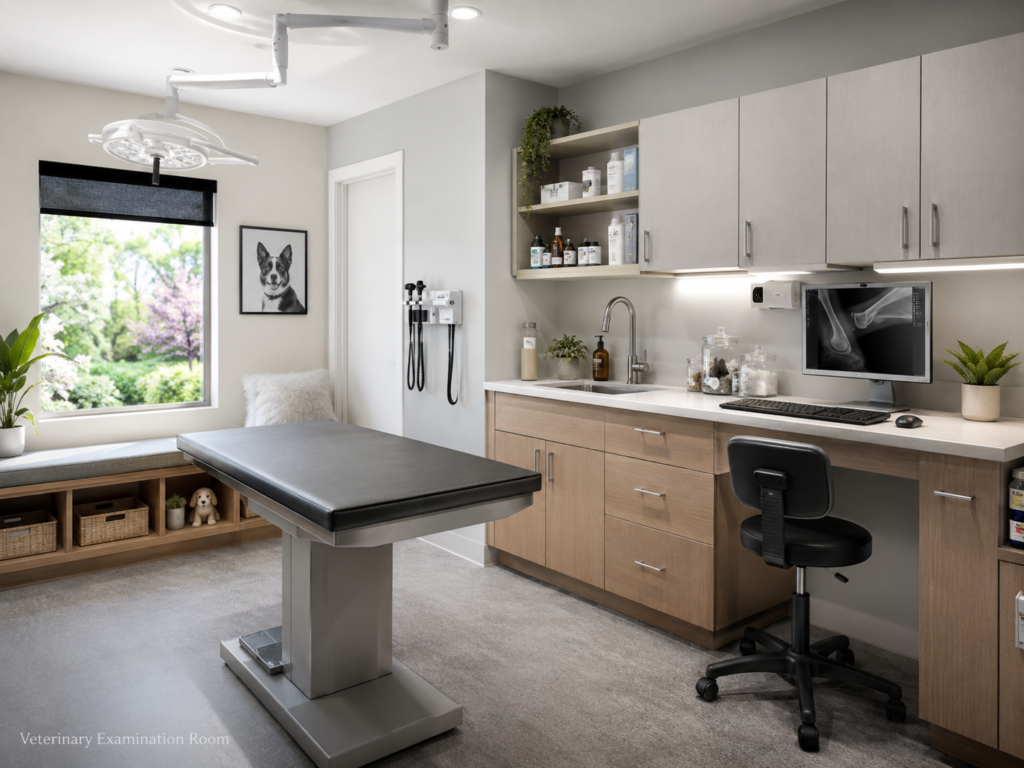
A veterinary surgical area should be separated from general traffic and organized to reduce contamination. A complete surgical department normally includes patient preparation, hand scrubbing, instrument preparation, the operating room, sterilization, and recovery.
Recommended Surgical Area Structure
A practical surgical department may contain:
- Preoperative preparation area
- Surgical scrub area
- Operating room
- Instrument-cleaning area
- Sterilization and packaging area
- Sterile storage
- Recovery area
The movement of staff, animals, instruments, and waste should follow a logical direction from less clean to cleaner areas.
Dirty instruments should never pass through sterile storage or enter the operating room before cleaning and reprocessing.
Recommended Operating Room Size
Suggested planning ranges include:
- 12–16 m², or 129–172 sq. ft., for one surgical table and a basic team
- 16–22 m², or 172–237 sq. ft., for more equipment and safer circulation
- 22–30 m², or 237–323 sq. ft., for orthopedic, specialty, or larger-team procedures
A room of approximately 4 × 4 meters provides 16 m² and can support many routine procedures when properly organized.
The surgical table should have approximately 1–1.2 meters of clear working space around the main sides wherever possible.
Preoperative Preparation Area
The preparation area may require approximately 8–12 m², depending on patient volume.
It should include:
- Preparation table
- Clippers
- Vacuum or hair-control system
- Sink
- Anesthesia equipment
- Oxygen access
- IV supplies
- Medication storage
- Waste containers
- Sharps container
Hair clipping and initial patient preparation should not take place inside the operating room.
Operating Room Materials
The operating room should use smooth, sealed, durable, and cleanable materials.
Flooring
Suitable options include:
- Seamless resin flooring
- Heat-welded sheet vinyl
- Healthcare-grade safety flooring
The floor should be non-slip, resistant to disinfectants, and coved upward at the wall junction where practical.
Walls
Recommended finishes include:
- Seamless hygienic wall systems
- Fiberglass-reinforced panels
- High-performance washable coatings
- Impact-resistant healthcare wall protection
Decorative brick, untreated wood, textured wallpaper, and open wall joints are not appropriate.
Ceiling
The ceiling should be smooth, sealed, and easy to clean. Open beams, exposed insulation, and surfaces that release dust should be avoided.
Surgical Lighting
The operating room should have:
- Strong general lighting
- Adjustable shadow-reducing surgical light
- Emergency lighting
- Clear visibility around anesthesia equipment
Lights should be positioned so staff do not block the surgical field.
Electrical, Oxygen and Suction Systems
The room requires sufficient electrical outlets for:
- Patient monitors
- Anesthesia equipment
- Warming systems
- Suction
- Electrosurgical equipment
- Infusion pumps
- Imaging equipment, where applicable
Cables should not create trip hazards.
Oxygen cylinders should be secured, or the room may use a piped medical-gas system designed and installed by qualified professionals.
Ventilation
Ventilation should help control heat, odor, airborne contamination, and anesthetic-gas exposure.
The surgical room should not receive air from isolation, kennel, cleaning, or contaminated utility areas. Waste anesthetic gases should be managed through an appropriate scavenging system.
Sterilization Area
A sterilization room or zone may require approximately 6–10 m².
It should follow one-way instrument flow:
Used instruments → washing → drying → inspection → packaging → sterilization → clean storage
Equipment may include:
- Deep instrument sink
- Ultrasonic cleaner
- Drying surface
- Packaging station
- Autoclave
- Sterilization indicators
- Closed sterile storage
Recovery Area
Recovery should be close to surgery and visible to staff.
It may include:
- Padded recovery cages
- Heating equipment
- Oxygen access
- Monitoring devices
- Reduced lighting
- Quiet surroundings
- Easy access to emergency equipment
Dogs and cats should be separated where practical.