A well-organized veterinary clinic should support efficient workflows, reduce stress for animals, and provide a safe environment for clients and staff. The layout should allow patients to move smoothly from reception and examination to treatment, recovery, and discharge.
The ideal structure depends on the clinic’s size, patient volume, available budget, and services. However, most veterinary clinics benefit from clearly separated functional areas designed around animal welfare, infection control, and staff efficiency.
Reception and Waiting Room
The reception and waiting area create the first impression of the clinic. This space should feel welcoming, clean, and easy to navigate.
The reception desk should be positioned close to the entrance so staff can greet clients immediately. It should provide enough room for computers, telephones, appointment scheduling, payment processing, and medical record management.
The waiting area should include:
- Comfortable, easy-to-clean seating
- Adequate space between clients and animals
- Good ventilation
- Clear signs and directions
- Hand-sanitizing stations
- Waste bins
- Educational materials
- A small retail area, where appropriate
Whenever possible, dogs and cats should have separate waiting areas. Cats often feel safer in quieter sections with raised shelves or designated spaces for carriers. Visual barriers may also help reduce stress and direct contact between animals.
Floors should be durable, non-slip, moisture-resistant, and able to withstand frequent cleaning and disinfecting.
Examination Rooms
Examination rooms should be located near the waiting area while remaining separated enough to provide privacy and reduce noise.
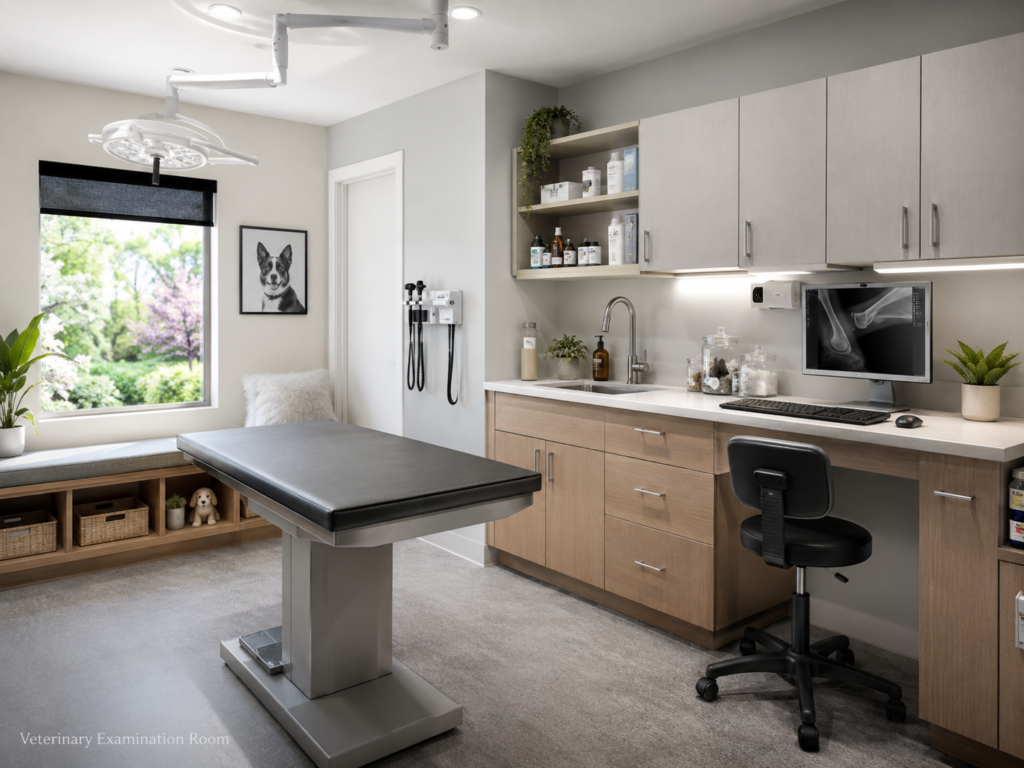
Each examination room should contain:
- Examination table
- Veterinary scale
- Handwashing sink
- Storage cabinets
- Medical waste bin
- Sharps container
- Computer or tablet
- Examination light
- Basic diagnostic tools
- Cleaning and disinfection supplies
Rooms should be large enough for the veterinarian, assistant, owner, and animal to move safely.
A dedicated cat-friendly examination room may also be useful. It should have a quieter environment, fewer strong odors, and enough space for cats to remain in their carriers until the examination begins.
Supplies should be stored in the same location in every examination room. Standardized organization helps staff work efficiently and reduces the risk of mistakes.
Treatment and Procedure Room
The treatment room is often the central clinical area of a veterinary facility. It may be used for blood collection, wound care, injections, catheter placement, minor procedures, and patient preparation.
Ideally, this room should be positioned near the examination rooms, laboratory, imaging area, pharmacy, and surgical suite.
Important features include:
- Multiple treatment tables
- Strong overhead lighting
- Oxygen access
- Electrical outlets
- IV fluid stands
- Medical storage
- Emergency equipment
- Easy access to medications
- Non-slip flooring
- Washable walls and surfaces
The room should be spacious enough for several team members to work without blocking one another.
A clearly organized emergency station or crash cart should be kept nearby and checked regularly.
In-House Laboratory
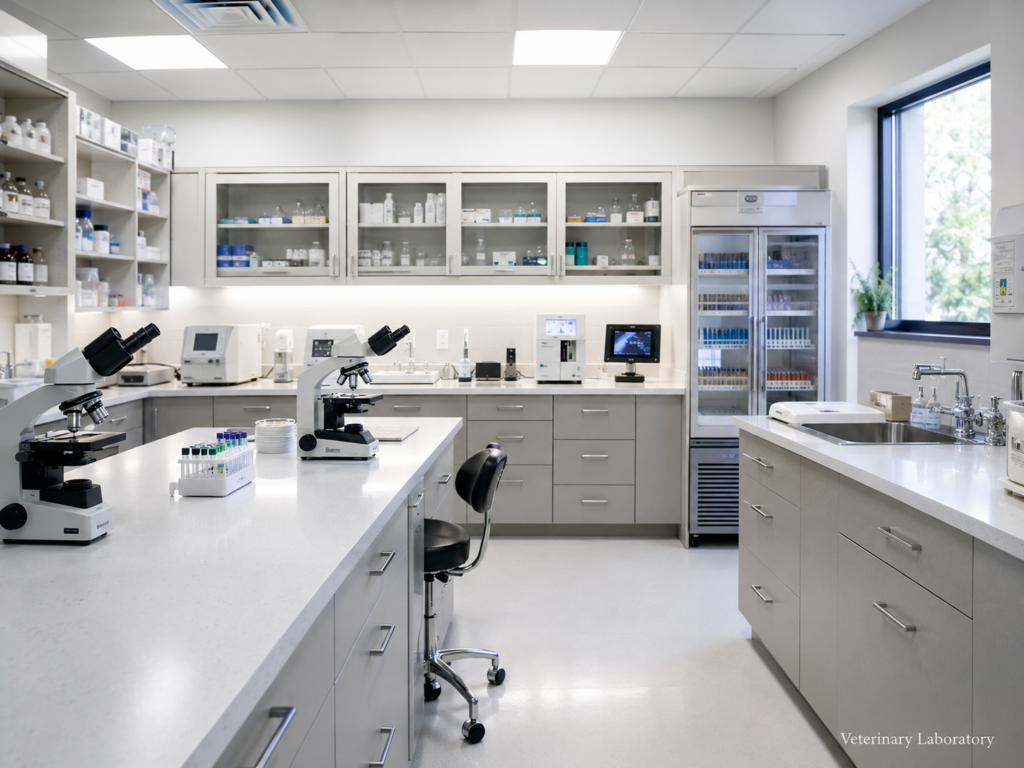
An in-house laboratory allows the clinic to perform basic diagnostic tests quickly.
The laboratory should be located close to the treatment area but away from food preparation zones, public spaces, and heavily contaminated areas.
It may include:
- Microscope
- Centrifuge
- Blood chemistry analyzer
- Hematology analyzer
- Urine analyzer
- Laboratory refrigerator
- Sample storage containers
- Sink
- Protective equipment
- Biohazard waste containers
Work surfaces should be chemical-resistant and easy to disinfect.
Clean and contaminated materials must be stored separately. Samples should be labeled clearly, and results should be entered into the patient’s medical record promptly.
The laboratory should also have adequate lighting, ventilation, and temperature control.
Surgical Suite
The surgical department should be separated from general traffic and treatment areas to reduce contamination.
A basic surgical section may include:
- Patient preparation area
- Scrub and sterilization area
- Operating room
- Recovery area
The operating room should contain only essential surgical equipment. Unnecessary storage and movement should be minimized.
Recommended equipment and features include:
- Surgical table
- Shadow-free surgical lighting
- Anesthesia machine
- Oxygen supply
- Patient monitor
- Suction equipment
- Instrument tables
- Easy-to-clean walls and floors
- Controlled access
Doors should remain closed during procedures. Staff should follow strict protocols for surgical clothing, hand preparation, equipment sterilization, and room cleaning.
Sterilization Area
The sterilization area should be designed so contaminated instruments move in one direction: from cleaning to drying, packaging, sterilization, and clean storage.
This area should include:
- Instrument-washing sink
- Ultrasonic cleaner
- Autoclave
- Drying space
- Packaging station
- Sterilization indicators
- Closed storage for sterile instruments
Dirty instruments should never cross paths with sterilized equipment.
Clear labeling, maintenance records, and documented sterilization procedures are essential.
Imaging Area
Clinics offering radiography or ultrasound services should have a dedicated imaging room.
The room should provide enough space for:
- X-ray table
- Digital imaging system
- Ultrasound machine
- Positioning aids
- Protective equipment
- Computer workstation
Radiography areas must comply with applicable radiation-safety requirements. Protective barriers, warning signs, controlled access, and staff training may be required.
The room should be positioned so animals can be transferred easily from treatment or hospitalization areas.
Hospitalization and Recovery Areas
Hospitalized animals need a calm, clean, secure, and closely monitored environment.
Dogs and cats should ideally be housed separately. This helps reduce stress caused by barking, unfamiliar smells, and direct visual contact.
Hospitalization areas should include:
- Secure kennels
- Comfortable bedding
- Food and water bowls
- IV fluid equipment
- Heating support
- Oxygen access
- Patient monitoring equipment
- Cleaning supplies
- Adequate drainage and ventilation
Kennels should be positioned so staff can observe patients easily.
Recovering animals should be monitored for breathing, temperature, pain, alertness, and general condition. Noise should be kept as low as possible.
Isolation Room
Animals with suspected contagious diseases should not enter general treatment or hospitalization areas whenever separation is possible.
An isolation room should have:
- A separate entrance, where practical
- Dedicated examination equipment
- Separate protective clothing
- Handwashing facilities
- Biohazard waste containers
- Easy-to-disinfect walls and floors
- Independent ventilation, where possible
Staff should enter and leave the room using strict infection-control procedures.
Equipment from the isolation area should not be used elsewhere unless it has been thoroughly cleaned and disinfected.
Pharmacy and Medication Storage
The clinic pharmacy should be secure and accessible only to authorized staff.
It should include:
- Lockable cabinets
- Organized medication shelves
- Vaccine refrigerator
- Temperature monitoring
- Controlled-drug safe
- Prescription preparation area
- Label printer
- Inventory management system
Medicines may be organized by type, expiration date, or frequency of use.
Expired products should be removed promptly. Vaccines and temperature-sensitive medications must be stored according to manufacturer instructions.
Food Preparation and Animal Care Area
A small food preparation area may be necessary for hospitalized animals.
It should be separated from the laboratory, operating room, instrument-cleaning area, and chemical-storage zones.
It may contain:
- Refrigerator
- Food storage cabinets
- Sink
- Preparation counter
- Measuring tools
- Patient feeding instructions
Each patient’s food should be labeled clearly to prevent dietary mistakes.
Cleaning and Laundry Room
Cleaning products should not be stored in examination rooms, treatment areas, or food preparation spaces.
A dedicated cleaning and laundry room may include:
- Mop sink
- Disinfectants
- Washing machine and dryer
- Cleaning tools
- Waste bags
- Protective gloves
- Storage shelves
Clean bedding and dirty laundry must remain separated.
A written cleaning schedule should identify which areas must be cleaned, how often cleaning is required, which products should be used, and who is responsible.
Staff Area and Office Space
Veterinary staff need private spaces for breaks, meetings, changing clothes, and administrative work.
The staff section may include:
- Break room
- Changing area
- Lockers
- Staff toilet
- Manager’s office
- Meeting space
- Medical record storage
Personal belongings should be kept away from clinical, laboratory, and food preparation areas.
A comfortable staff area can improve morale, communication, and workplace well-being.
Storage Rooms
Veterinary clinics often require more storage than new clinic owners expect.
Separate storage should be planned for:
- Medical supplies
- Surgical equipment
- Cleaning products
- Pet food
- Office supplies
- Seasonal stock
- Waste containers
Frequently used items should be easy to access, while bulk supplies can be stored in a central stockroom.
Inventory should be monitored regularly to prevent shortages, expired products, and unnecessary purchases.
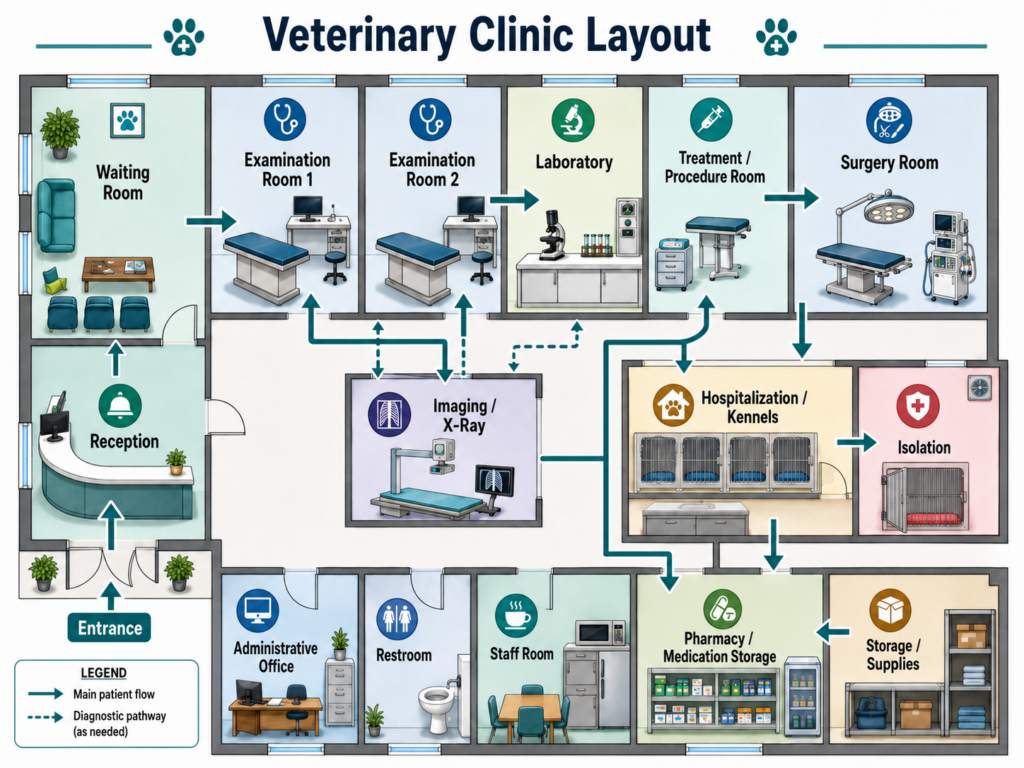
Recommended Patient Flow
An efficient clinic should follow a logical patient pathway:
Entrance → Reception → Waiting Room → Examination Room → Treatment, Laboratory or Imaging → Surgery or Hospitalization → Discharge
Animals suspected of having infectious diseases should use a separate route whenever possible.
Staff movement should also be considered. Veterinarians and assistants should not need to cross the entire clinic repeatedly to collect supplies or reach essential equipment.
Common Layout Mistakes to Avoid
Poor clinic planning may create unnecessary stress, delays, contamination risks, and safety problems.
Common mistakes include:
- Placing the laboratory too far from the treatment room
- Allowing public traffic through clinical areas
- Providing insufficient storage
- Mixing clean and contaminated equipment
- Keeping dogs and cats together in crowded spaces
- Failing to create an isolation area
- Designing narrow corridors
- Using slippery or difficult-to-clean surfaces
- Providing too few electrical outlets
- Ignoring future expansion needs
Planning these details before construction or renovation can prevent expensive changes later.
Final Considerations
A veterinary clinic should be organized around three main priorities: animal welfare, infection prevention, and efficient workflow.
Public areas should feel welcoming, while clinical areas should be functional, durable, secure, and easy to disinfect. Dogs, cats, contagious patients, surgical cases, and recovering animals should be separated whenever space allows.
Before construction or renovation begins, clinic owners should review applicable building, accessibility, fire-safety, radiation, waste-management, and veterinary-facility requirements.
A carefully planned clinic structure can reduce animal stress, improve staff performance, strengthen infection control, and help the practice provide safer and more professional care.