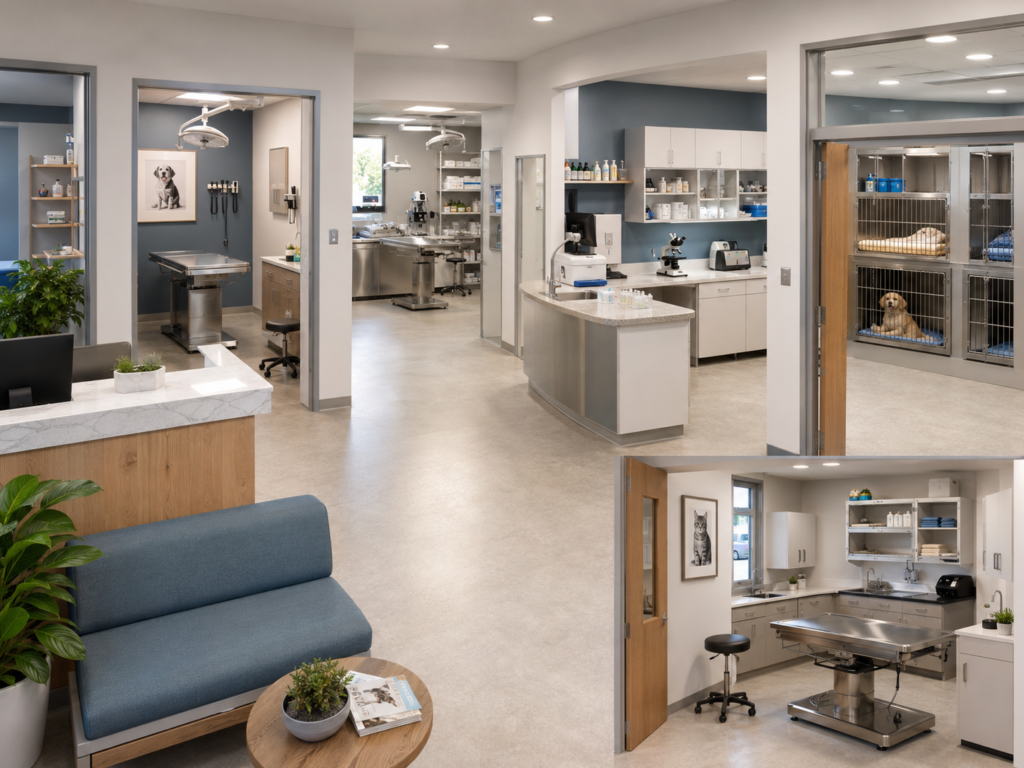
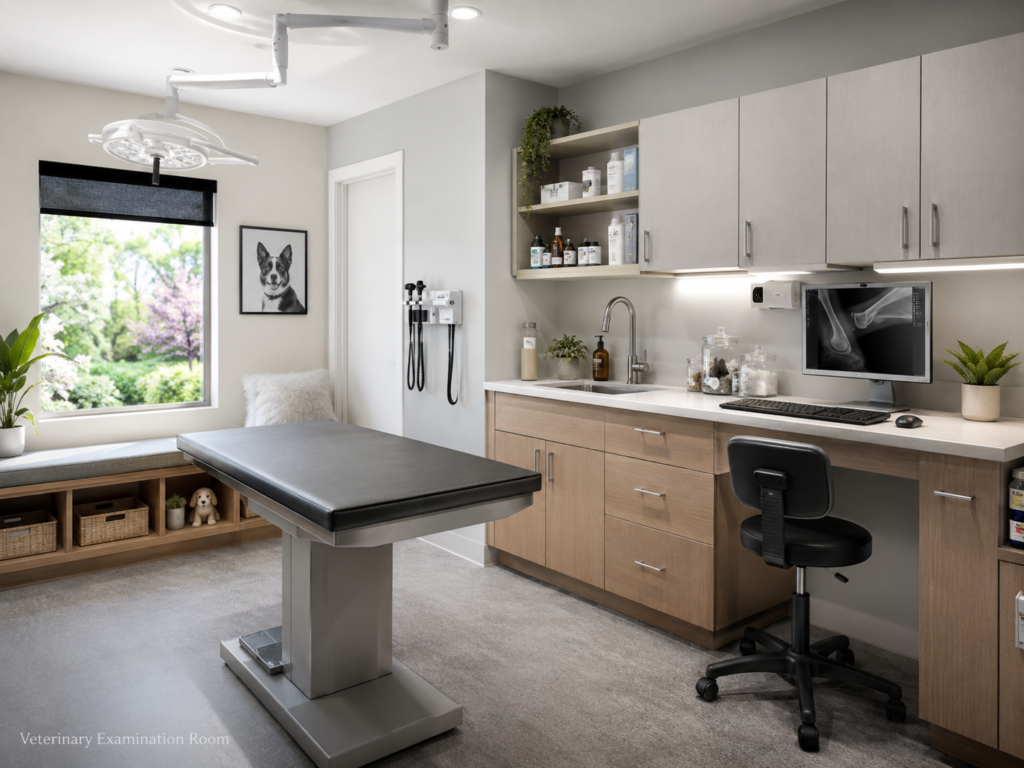
Storage is often underestimated during veterinary-clinic planning. Insufficient storage can lead to cluttered treatment rooms, blocked corridors, expired products, contamination, and inefficient staff movement.
Storage should be divided according to the type of item and its safety requirements.
Recommended Storage Area
A small clinic may require at least 10–15% of its total floor area for storage, although hospitals with bulk purchasing, large equipment, pharmacy stock, pet food, and surgical supplies may require more.
Practical room sizes include:
- 4–6 m² for a small clean-supply room
- 8–12 m² for a central medical stockroom
- 12–20 m² for a larger clinic with bulk inventory
Storage should not be concentrated in one room if staff must repeatedly cross the clinic to retrieve frequently used supplies.
Storage Categories
Separate storage should be provided for:
- Clean medical supplies
- Sterile surgical supplies
- Medications
- Vaccines and refrigerated products
- Controlled medicines
- Laboratory reagents
- Cleaning chemicals
- Pet food
- Office supplies
- Large equipment
- Dirty laundry
- General waste
- Biohazardous waste
Cleaning chemicals should never be stored with food, medications, or sterile supplies.
Shelving Dimensions
Shelving may have a depth of approximately:
- 30–40 centimeters for small supplies
- 45–60 centimeters for larger boxes
- 60 centimeters or more for bulky equipment
Aisles should provide safe movement and allow staff to carry boxes without striking shelves. Approximately 90–120 centimeters of clear aisle width is practical, subject to local code and accessibility requirements.
Frequently used products should be stored between waist and shoulder height. Heavy items should be placed on lower shelves.
Shelving Materials
Suitable shelving includes:
- Powder-coated steel
- Stainless steel
- Sealed commercial laminate
- Durable polymer shelving
Shelves should be smooth, corrosion-resistant, washable, and strong enough for their intended loads.
Untreated wood, damaged particleboard, and absorbent shelving should be avoided in clinical storage rooms.
Floor and Wall Materials
Storage-room floors should be durable, moisture-resistant, and easy to clean.
Walls should have washable finishes, particularly where chemicals, food, or medical supplies are stored.
Supplies should not be placed directly on the floor. Raised shelves or platforms make cleaning easier and protect products from leaks and moisture.
Medication Storage
Medication storage should include:
- Lockable cabinets
- Controlled-drug safe
- Temperature-controlled refrigerator
- Temperature-monitoring system
- Clearly labeled shelves
- Quarantine area for damaged or expired products
- Restricted staff access
Refrigerators used for vaccines and medicines should not contain food or drinks.
Chemical Storage
Cleaning products and hazardous chemicals require:
- Clearly labeled containers
- Safety data sheets
- Secure shelving
- Ventilation where required
- Spill-control materials
- Separation of incompatible products
- Restricted access
Chemicals should not be stored above sinks, above medications, or in locations where leaks could contaminate supplies.
Inventory Management
A reliable inventory system should record:
- Product name
- Quantity
- Batch or lot number where relevant
- Expiration date
- Storage location
- Supplier
- Reorder level
- Purchase date
- Person responsible
The first-expiring products should normally be used first.
Regular inventory checks help prevent shortages, over-ordering, and expired stock.
Clean and Dirty Storage
Clean bedding, sterile instruments, and packaged supplies must remain separate from:
- Used instruments
- Dirty laundry
- Waste
- Cleaning tools
- Returned or contaminated items
Dirty utility spaces should have their own ventilation, washable finishes, and waste-management procedures.
Final Layout Principles
Examination rooms should be close to reception and treatment areas. The laboratory should be positioned beside treatment and diagnostic spaces. Surgery should be separated from general traffic and connected to preparation, sterilization, and recovery. Reception should support safe client movement, while storage should be distributed according to frequency of use.
A logical clinic pathway may follow:
Entrance → Reception → Waiting Area → Examination Room → Treatment or Diagnostics → Surgery or Hospitalization → Discharge
Infectious patients, waste, dirty instruments, food, and sterile supplies should use separate routes wherever possible.
Careful planning of structure, dimensions, materials, storage, ventilation, and movement can improve safety, reduce animal stress, strengthen infection control, and help the veterinary team work more efficiently.