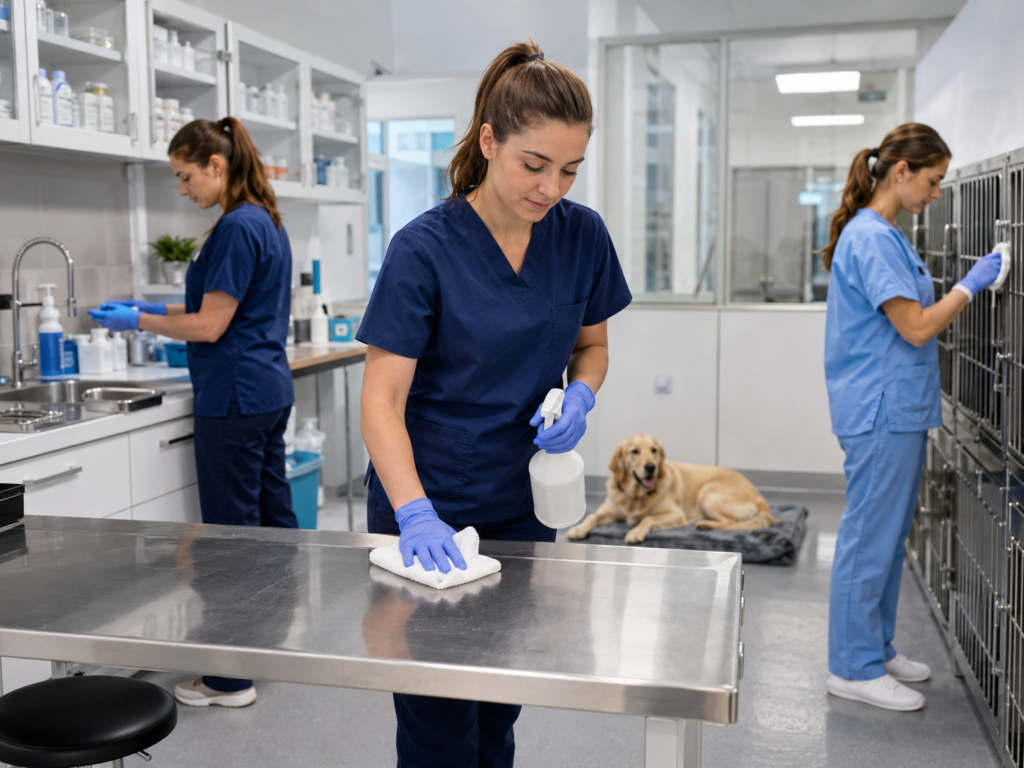
Cleaning and disinfection should be based on written procedures, not individual memory. A useful schedule defines what is cleaned, which product is used, who is responsible, how often the task is completed and how completion is recorded.
Cleaning removes organic material and debris. Disinfection uses an appropriate product under the correct concentration and contact time. A disinfectant is less reliable when surfaces remain visibly dirty.
After every patient
- Remove disposable materials and visible debris
- Clean and disinfect patient-contact surfaces
- Change table covers, towels or bedding
- Clean reusable restraint or examination tools as required
- Perform hand hygiene and replace used PPE
- Manage spills immediately according to clinic protocol
Daily tasks
| Area | Daily tasks |
| Examination rooms | Tables, handles, scales, work surfaces, floors and frequently touched items |
| Treatment area | Tables, counters, equipment contact points, sinks and floors |
| Surgery | Approved between-case and end-of-day cleaning according to procedure type |
| Kennels and recovery | Housing, bowls, bedding, waste removal and surrounding surfaces |
| Laboratory | Benches, centrifuge surfaces, sample areas and waste containers |
| Reception and waiting | Seats, counters, door handles, payment devices and floors |
| Staff areas | Shared surfaces, sinks and waste handling |
Weekly tasks
- Clean shelves and storage surfaces
- Move accessible furniture and clean underneath
- Inspect walls, corners and vents for dust or contamination
- Deep-clean reusable cages, carriers and restraint tools
- Review cleaning-product stock and expiration dates
- Inspect mops, brushes, buckets and cleaning carts
- Check laundry and waste areas for workflow problems
Monthly tasks
- Audit compliance with cleaning records
- Review product instructions and surface compatibility
- Inspect damaged sealants, flooring and difficult-to-clean surfaces
- Review isolation-area supplies
- Assess ventilation, odor and moisture concerns
- Review staff training and repeated cleaning failures
- Update the written schedule when rooms or services change
High-risk situations
Known or suspected infectious disease, large body-fluid spills and outbreaks require enhanced procedures. The clinic’s infection-control plan should define isolation, PPE, patient movement, waste and terminal cleaning.
What the schedule should record
- Area or item
- Task
- Product and dilution
- Required contact time
- Frequency
- Responsible role
- Completion date and initials
- Corrective action when a task is missed
Common cleaning mistakes
- Spraying disinfectant onto visible organic material without cleaning first
- Wiping a surface dry before the required contact time
- Using one cloth across multiple rooms
- Mixing chemicals or using unlabelled bottles
- Failing to clean shared devices and computer peripherals
- Keeping damaged porous surfaces that cannot be effectively disinfected
Frequently asked questions
Should every surface use the same disinfectant?
Not always. Product choice depends on the target organisms, required contact time, material compatibility, safety and manufacturer instructions. The clinic should approve products centrally.
Who should own the schedule?
A designated infection-control lead or manager should maintain the program, but each task needs a clearly assigned role. Shared responsibility without ownership often results in missed work.
Internal links to add
- Complete Veterinary Examination Room Checklist
- How to Organize Veterinary Clinic Inventory
- Common Veterinary Clinic Layout Mistakes
Sources and references
- AAHA – Infection Control, Prevention and Biosecurity Guidelines: https://www.aaha.org/resources/2018-aaha-infection-control-prevention-and-biosecurity-guidelines/
- AAHA – Overview of ICPB Procedures: https://www.aaha.org/resources/2018-aaha-infection-control-prevention-and-biosecurity-guidelines/procedures-overview/
AVMA – Personal Protective Equipment: https://www.avma.org/personal-protective-equipment-ppe