Beginner-Friendly Indoor Plants for Busy People
Indoor plants can make a home feel fresher, calmer and more inviting, but not everyone has time for a complicated plant-care routine. The good news is that many popular houseplants are surprisingly forgiving and can thrive with only basic attention.
If you are busy, travel often or simply want plants that do not need constant care, choosing the right varieties can make a big difference. The goal is not to create a perfect indoor garden, but to choose plants that fit naturally into your everyday routine.
Why Choose Low-Maintenance Indoor Plants?
Low-maintenance plants are ideal for beginners because they usually tolerate occasional missed watering, changing indoor conditions and simple care routines.
They can be especially useful for people who:
- work long hours
- travel frequently
- are new to indoor gardening
- forget to water plants occasionally
- want greenery without a complicated routine
Even easy-care plants still need light, water and basic attention, but they generally do not require daily maintenance.
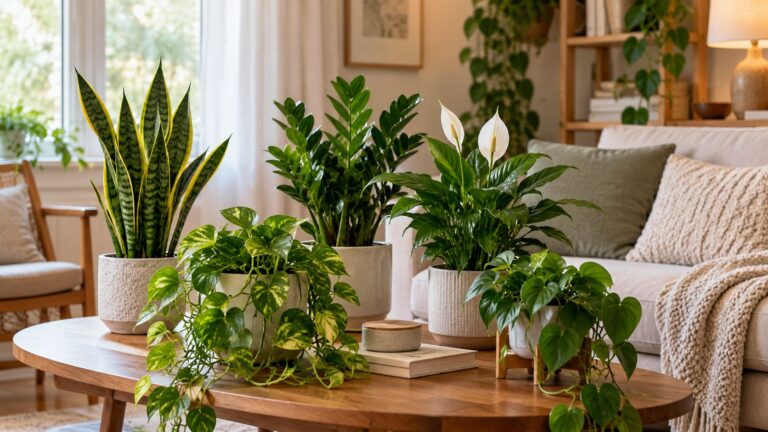
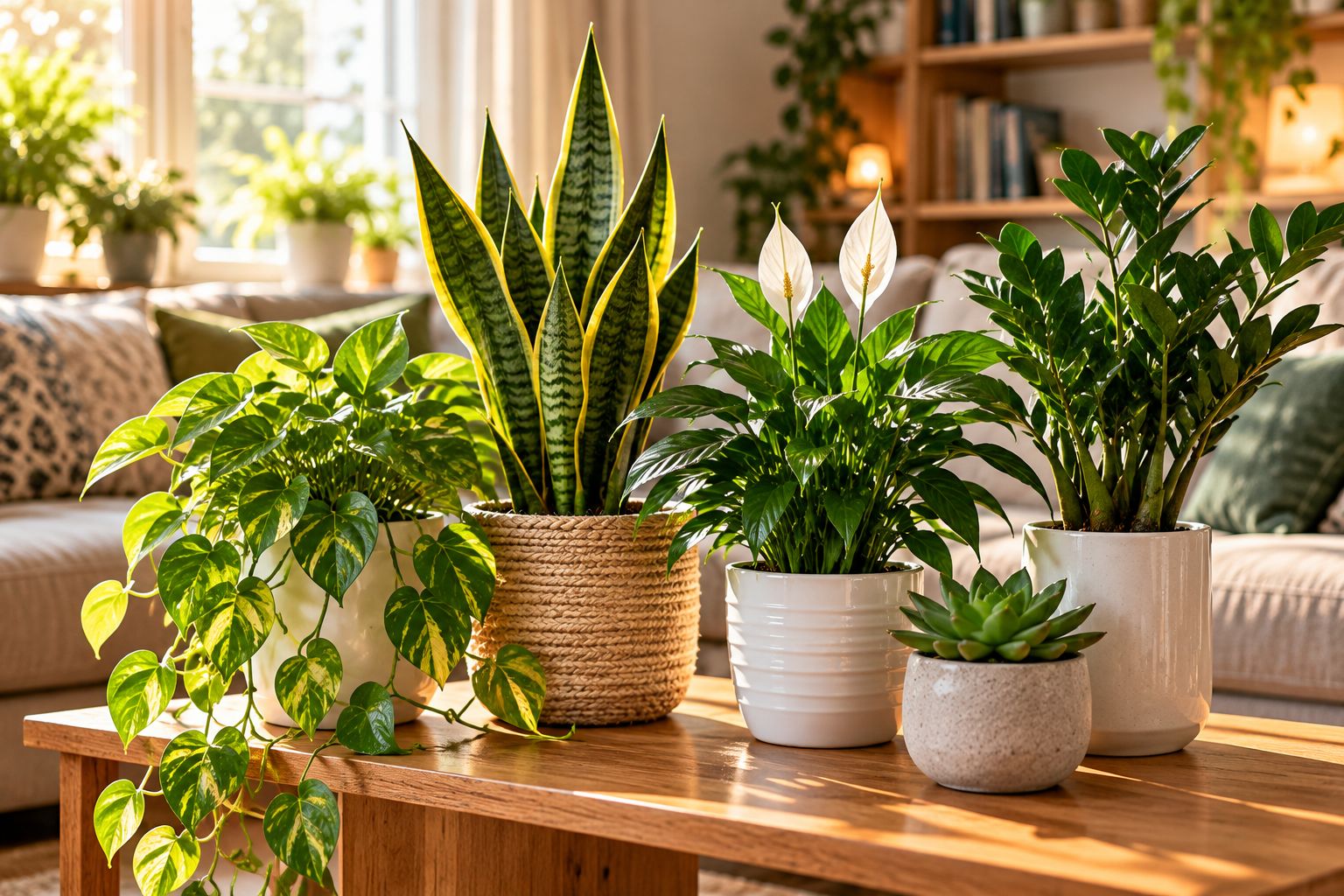
Snake Plant
The snake plant is one of the most popular choices for beginners.
It has tall, upright leaves and can fit into many types of home decor. One reason it is so beginner-friendly is that it usually handles periods of dry soil better than frequent overwatering.
Place it in bright indirect light if possible, although many snake plants can also adapt to lower-light areas.
Allow the soil to dry between waterings rather than keeping it constantly wet.
Pothos
Pothos is another excellent plant for busy households.
Its trailing vines can look attractive on shelves, bookcases or hanging planters. It is also easy to notice when the plant begins to need attention because the leaves may start to look less firm.
Pothos generally prefers bright, indirect light but can adapt to a range of indoor conditions.
Water when the upper part of the soil feels dry.
ZZ Plant
The ZZ plant is well known for being easy to care for.
Its glossy green leaves can give a room a clean, modern appearance, and the plant usually does not require frequent watering.
It can tolerate lower-light environments better than many houseplants, although brighter indirect light can support stronger growth.
Because the plant stores moisture in its underground structures, it is usually better to let the soil dry rather than water too frequently.
Spider Plant
Spider plants are popular with beginners because they are adaptable and easy to grow.
Their long, arching leaves work well in hanging baskets or on shelves. Mature plants may also produce small offshoots that can eventually be separated and grown as new plants.
Spider plants generally prefer bright, indirect light.
Water when the upper soil begins to dry, and avoid leaving the plant sitting in water.
Heartleaf Philodendron
The heartleaf philodendron is another attractive trailing plant that works well for beginners.
Its heart-shaped leaves can grow along shelves or from hanging containers, making it useful for small spaces.
It generally prefers indirect light and moderate watering.
Before watering again, check the soil rather than following a strict calendar. If the upper layer still feels damp, the plant may not need water yet.
Cast Iron Plant
As its name suggests, the cast iron plant has a reputation for being tough.
It is a useful choice for rooms that do not receive strong sunlight, and its broad green leaves can add a simple, classic look to a space.
This plant typically prefers soil that is allowed to dry slightly between waterings.
It also does not usually need frequent repotting or complicated care.
Chinese Evergreen
Chinese evergreen plants are popular because of their attractive leaves and relatively simple care needs.
Different varieties may feature green, silver or patterned foliage.
They generally do well in moderate indirect light and can adapt to many indoor environments.
Water when the upper part of the soil becomes dry, and try to avoid keeping the roots constantly wet.
Peace Lily
Peace lilies are popular indoor plants with dark green leaves and distinctive white flowers.
They can work well for beginners because they often show visible signs when they need water, such as slightly drooping leaves.
They usually prefer bright, indirect light but can tolerate some lower-light conditions.
Water when the soil begins to dry, but avoid keeping it permanently saturated.
Aloe Vera
Aloe vera can be a practical choice for people who sometimes forget to water their plants.
Because it is a succulent, it stores water in its thick leaves and generally prefers the soil to dry between waterings.
Place aloe vera somewhere with plenty of bright light.
Avoid watering too frequently, especially during cooler months when the soil may stay wet for longer.
Rubber Plant
Rubber plants can grow into attractive statement plants with large, glossy leaves.
They generally prefer bright, indirect light and do not require complicated care.
Water when the top portion of the soil feels dry.
Occasionally wiping dust from the leaves can help keep the plant looking clean and attractive.
Choose the Right Location First
One of the easiest ways to keep indoor plants healthy is to place them in an appropriate location from the beginning.
Before buying a plant, look at the room where you plan to keep it.
Consider:
- how much natural light enters the room
- whether the light is direct or indirect
- how close the plant will be to heating or cooling vents
- whether the location is easy to reach for watering
A plant that matches the conditions of the room will usually be easier to maintain.
Avoid Watering on a Strict Schedule
One of the most common mistakes beginners make is watering every plant on the same day each week.
Different plants and different rooms can dry at different speeds.
Instead, check the soil before watering.
For many common houseplants, inserting a finger into the upper part of the soil can help you determine whether it is still damp.
If the soil is still moist, waiting a little longer may be better than adding more water.
Use Pots with Drainage
Good drainage makes indoor plant care much easier.
When possible, choose pots with drainage holes so excess water can leave the container.
If you use a decorative outer pot without drainage, consider placing the plant inside it in a smaller nursery pot that can be removed for watering.
This helps reduce the chance of roots sitting in excess water.
Keep Plant Care Simple
You do not need a large collection of special products to care for beginner houseplants.
A basic routine can include:
- checking soil moisture
- removing damaged leaves
- wiping dust from large leaves
- turning plants occasionally for more even light exposure
- checking periodically for visible pests
Keeping the routine simple makes it more likely that you will maintain it consistently.
Start with Only a Few Plants
If you are new to houseplants, avoid buying a large collection at once.
Start with two or three easy-care plants and learn how they respond to the conditions in your home.
Once you feel comfortable with the routine, you can gradually add more.
This is usually easier than trying to learn how to care for ten different plants at the same time.
Pay Attention to the Plant, Not Just the Calendar
Plants can give you useful clues about their condition.
Changes in leaf color, drooping, unusually slow growth or consistently wet soil may indicate that something in the care routine needs adjustment.
Instead of automatically adding more water or fertilizer, first consider whether the plant is receiving suitable light and whether the soil is drying properly.
A Simple Indoor Garden Can Still Look Beautiful
You do not need rare plants or advanced gardening knowledge to create a welcoming indoor space.
A few healthy, well-placed plants can have more visual impact than a large collection that is difficult to maintain.
Choose plants that fit your schedule, place them in suitable locations and build a simple routine that you can realistically follow.
For busy people and beginners, consistency is usually more valuable than complicated plant care.