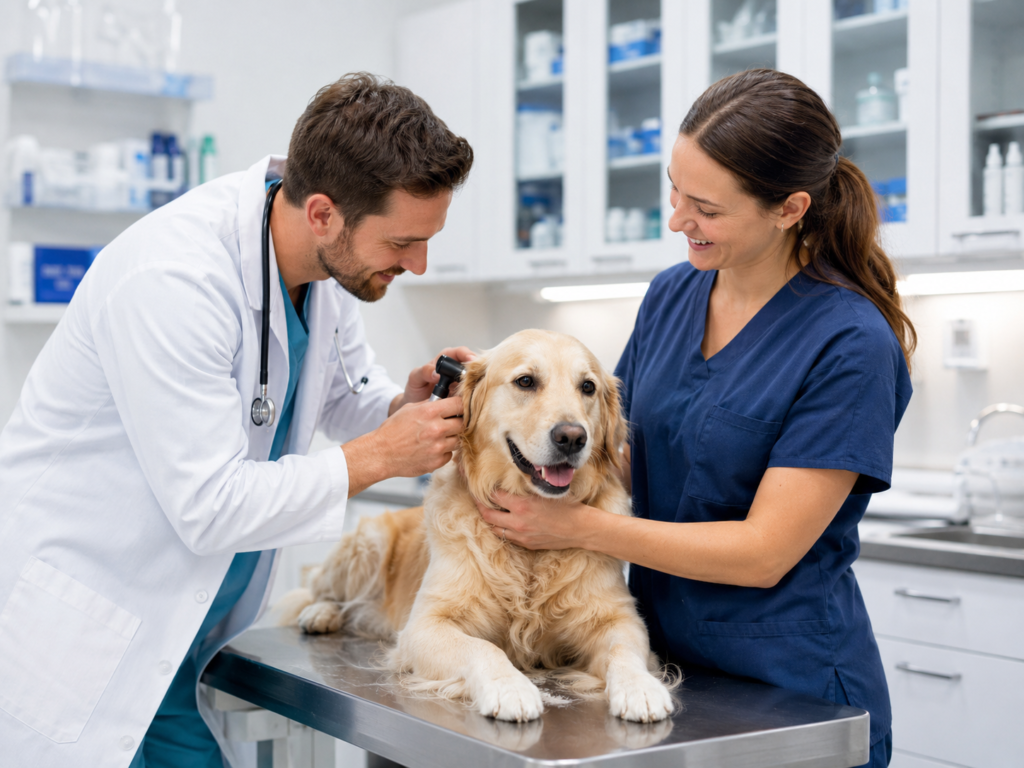
Common Veterinary Clinic Staff and Their Responsibilities
A veterinary clinic depends on a coordinated team of medical, technical and administrative professionals. Each staff member has a specific role, but successful patient care requires clear communication and teamwork across the entire clinic.
The exact number of employees depends on the size of the practice, the services offered and the number of patients treated. A small clinic may have a few team members who perform several duties, while a larger veterinary hospital may employ specialized departments.
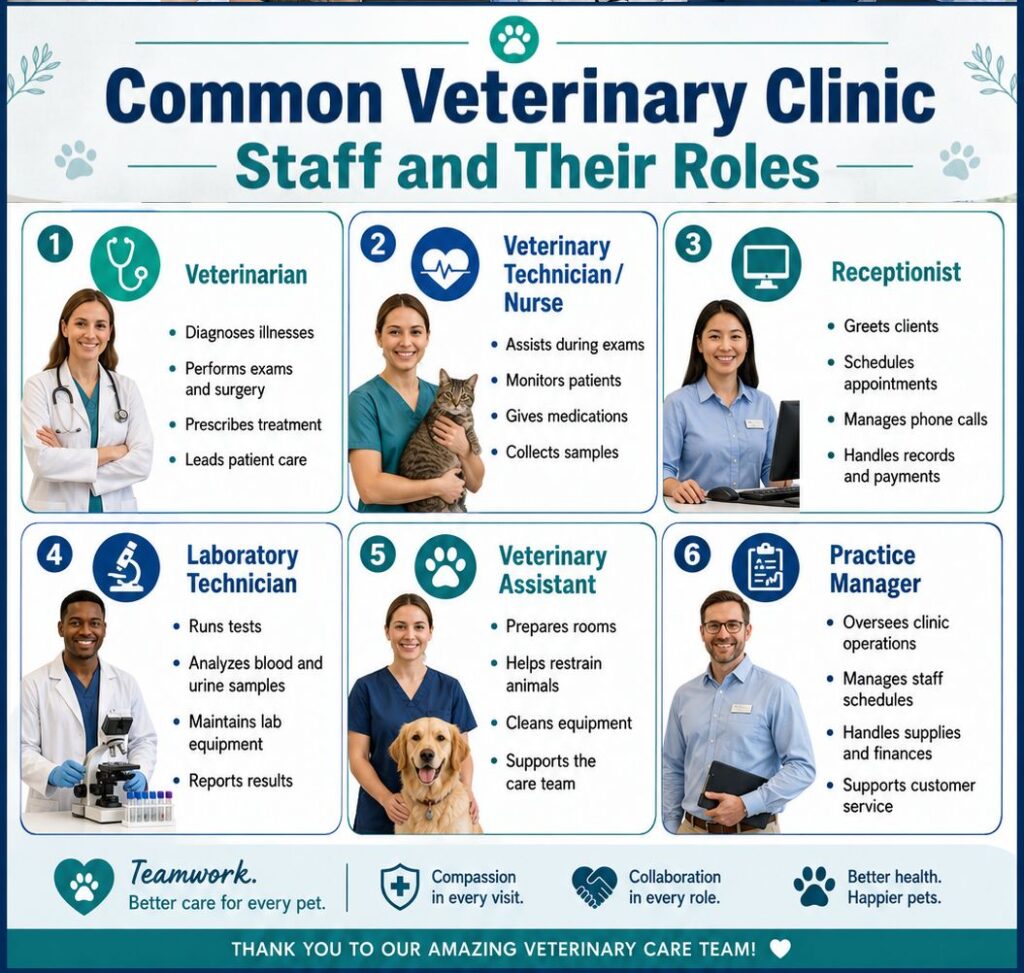
Veterinarian
The veterinarian is responsible for diagnosing illnesses, treating injuries, prescribing medication and managing the overall medical care of animals.
Common duties include:
- Performing physical examinations
- Diagnosing diseases and injuries
- Ordering and interpreting laboratory tests
- Prescribing medication
- Performing surgical procedures
- Providing vaccinations
- Creating treatment plans
- Advising pet owners about nutrition and preventive care
- Managing emergency cases
- Maintaining accurate medical records
Veterinarians may focus on companion animals, farm animals, exotic animals, surgery, dentistry, dermatology, emergency medicine or other specialties.
Veterinary Technician or Veterinary Nurse
Veterinary technicians, also called veterinary nurses in some countries, support veterinarians during examinations, treatments, diagnostic procedures and surgery.
Their responsibilities may include:
- Collecting blood, urine and other samples
- Performing laboratory tests
- Preparing animals for surgery
- Monitoring anesthesia
- Taking X-rays
- Administering medication under veterinary supervision
- Placing intravenous catheters
- Monitoring hospitalized patients
- Cleaning and dressing wounds
- Educating owners about home care
Veterinary technicians require appropriate education and training. Licensing or registration requirements vary by country.
Veterinary Assistant
Veterinary assistants help with basic animal care, cleaning, patient handling and daily clinic operations.
Typical duties include:
- Safely restraining animals
- Preparing examination rooms
- Cleaning kennels and treatment areas
- Feeding and walking hospitalized animals
- Restocking medical supplies
- Washing and sterilizing instruments
- Assisting technicians and veterinarians
- Preparing equipment for procedures
- Transporting animals between clinic areas
Veterinary assistants often work closely with technicians but usually have fewer clinical responsibilities.
Veterinary Receptionist
The receptionist is often the first person clients meet when they enter or contact the clinic.
Reception duties commonly include:
- Scheduling appointments
- Greeting clients
- Answering telephone calls and emails
- Registering new patients
- Updating client and animal information
- Processing payments
- Preparing invoices
- Managing appointment reminders
- Directing emergencies to the medical team
- Maintaining the reception and waiting areas
Receptionists must communicate calmly and clearly, especially when clients are worried about their animals.
Practice Manager
The practice manager oversees the administrative and operational side of the veterinary clinic.
Responsibilities may include:
- Managing staff schedules
- Recruiting and training employees
- Monitoring clinic finances
- Managing payroll and expenses
- Ordering supplies
- Supervising inventory
- Developing workplace procedures
- Handling client complaints
- Ensuring compliance with clinic policies
- Supporting communication between departments
In smaller clinics, the clinic owner or senior veterinarian may also perform the practice manager’s duties.
Veterinary Surgeon
Some clinics employ a veterinarian who focuses primarily on surgical procedures.
A veterinary surgeon may perform:
- Spaying and neutering
- Soft-tissue surgery
- Orthopedic procedures
- Emergency surgery
- Tumor removal
- Reconstructive procedures
- Surgical consultations
- Postoperative monitoring
Specialized surgery may require advanced equipment, additional training and dedicated support staff.
Anesthesia Technician
Larger veterinary hospitals may employ technicians who specialize in anesthesia and surgical monitoring.
Their role may include:
- Preparing anesthesia equipment
- Calculating medication doses
- Assisting with intubation
- Monitoring heart rate and breathing
- Monitoring oxygen levels and blood pressure
- Maintaining patient body temperature
- Recording anesthesia information
- Supporting postoperative recovery
Careful monitoring is essential before, during and after surgery.
Laboratory Technician
A veterinary laboratory technician performs and manages diagnostic testing.
Common tasks include:
- Preparing blood and urine samples
- Operating laboratory analyzers
- Examining samples under a microscope
- Performing blood counts and chemistry tests
- Maintaining laboratory equipment
- Recording and reporting results
- Managing sample storage
- Following biosecurity procedures
Smaller clinics may assign these responsibilities to veterinary technicians instead of employing a separate laboratory specialist.
Veterinary Pharmacist or Pharmacy Assistant
Large veterinary hospitals may have staff dedicated to medication preparation and pharmacy management.
Their responsibilities may include:
- Preparing prescriptions
- Labeling medications
- Checking dosage instructions
- Monitoring medication inventory
- Storing vaccines correctly
- Managing controlled drugs
- Removing expired products
- Explaining medication instructions to clients
In many clinics, veterinarians, technicians or trained reception staff manage these duties.
Animal Care Attendant or Kennel Assistant
Animal care attendants focus on the comfort, hygiene and daily care of hospitalized or boarding animals.
Typical duties include:
- Feeding animals
- Providing fresh water
- Cleaning cages and kennels
- Changing bedding
- Walking dogs
- Monitoring behavior
- Reporting health changes
- Maintaining isolation areas
- Assisting with basic grooming
- Keeping hospitalization areas clean
They play an important role in maintaining animal welfare and informing the medical team about changes in a patient’s condition.
Veterinary Groomer
Some veterinary clinics offer grooming services as part of their business.
A groomer may provide:
- Bathing
- Brushing
- Coat trimming
- Nail clipping
- Ear cleaning
- Hygiene trimming
- Basic skin and coat observations
Groomers should report any unusual lumps, wounds, parasites or skin problems to the veterinary team.
Cleaning and Maintenance Staff
A clean veterinary clinic is essential for infection control and workplace safety.
Cleaning staff may be responsible for:
- Disinfecting floors and surfaces
- Cleaning waiting and examination rooms
- Managing laundry
- Removing clinical waste
- Restocking hygiene supplies
- Cleaning staff areas
- Maintaining toilets
- Reporting damaged equipment or facilities
Clinical and non-clinical waste must be handled according to the clinic’s safety procedures.
Accountant or Financial Administrator
Larger clinics may employ an accountant or financial administrator to manage financial records.
Their duties may include:
- Tracking income and expenses
- Preparing financial reports
- Managing invoices
- Supporting payroll
- Monitoring unpaid accounts
- Preparing tax documents
- Assisting with budgeting
- Reviewing purchasing costs
Smaller clinics often use an external accountant instead of hiring one full-time.
Marketing and Client Communication Coordinator
A veterinary clinic may also employ someone to manage marketing and communication.
Responsibilities can include:
- Managing the clinic website
- Creating social media content
- Sending newsletters
- Promoting preventive care campaigns
- Responding to online reviews
- Preparing educational materials
- Supporting client retention programs
- Advertising new services
This role can help the clinic build trust and maintain strong relationships with pet owners.
Recommended Staff Structure for a Small Clinic
A small veterinary clinic may begin with:
- One or two veterinarians
- One veterinary technician
- One veterinary assistant
- One receptionist
- One cleaner or kennel assistant
- One practice manager, possibly combined with another role
As the number of patients increases, the clinic can add additional technicians, receptionists, surgeons and animal care staff.
Importance of Teamwork
Veterinary medicine is a team-based profession. Clear responsibilities help prevent mistakes, but communication between roles is equally important.
Regular staff meetings, written procedures and proper training can improve:
- Patient safety
- Client satisfaction
- Staff efficiency
- Infection control
- Emergency response
- Workplace morale
Every team member should know who is responsible for each task and when concerns must be reported to a veterinarian or manager.
Final Considerations
The most effective veterinary clinic staff structure depends on the clinic’s size, budget, opening hours and services.
Every practice should have enough trained personnel to provide safe medical care, maintain cleanliness, communicate with clients and manage daily operations. Roles may overlap in smaller clinics, but clinical duties should only be performed by staff members who are properly trained and legally authorized.
A balanced and well-organized team helps the clinic operate efficiently while providing animals and their owners with professional, compassionate care.