How to Keep Wooden Furniture Looking Good for Longer
Wooden furniture can make a home feel warmer, more natural and more inviting. Tables, cabinets, shelves and dressers can also last for many years when they are cleaned and cared for properly.
The good news is that everyday wood care does not need to be complicated. A few simple habits can help reduce scratches, water marks, dust buildup and unnecessary wear.
The most important thing is to treat the surface gently and follow the manufacturer’s care instructions when they are available.
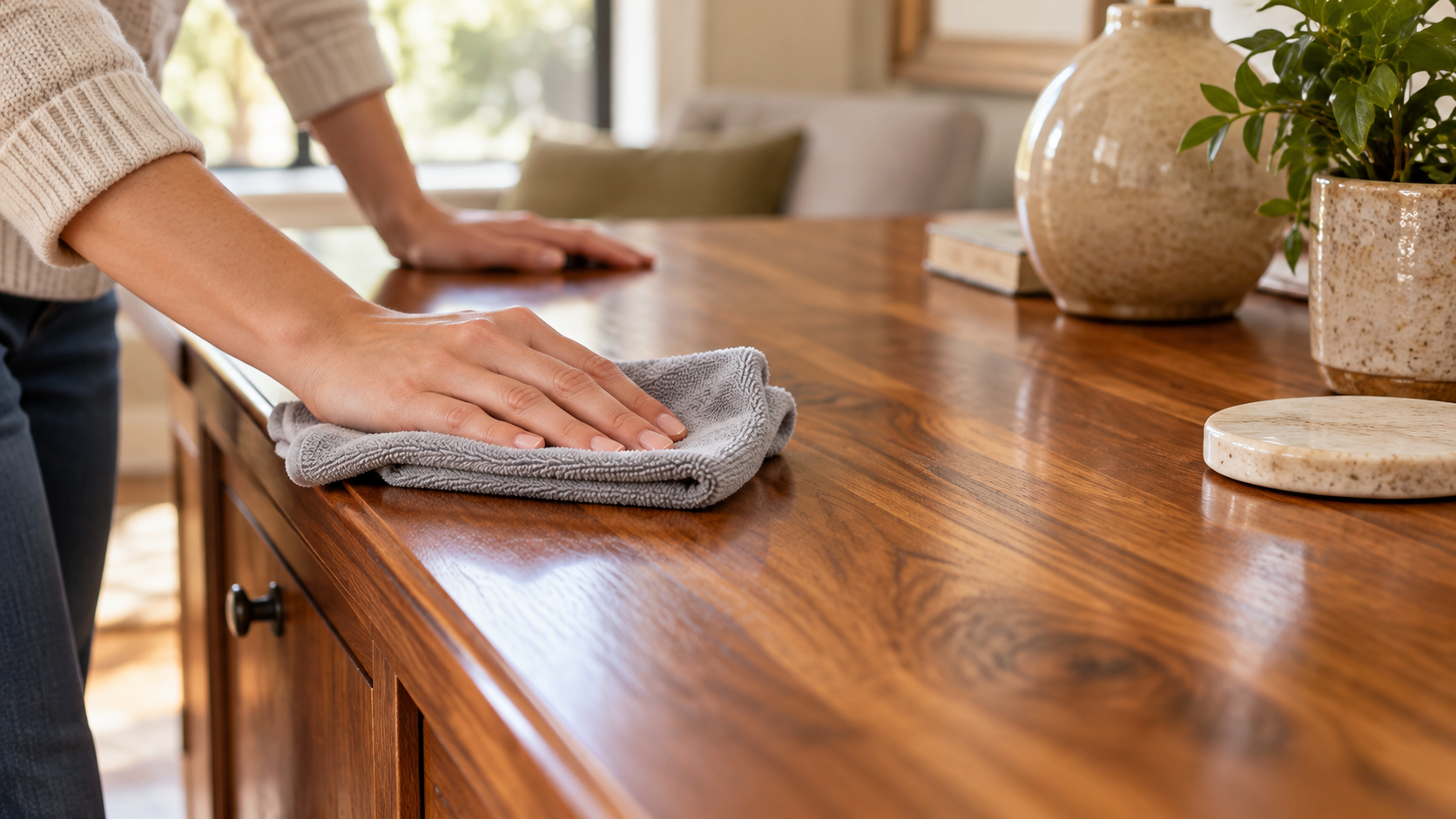
Dust Wooden Furniture Regularly
Dust can build up quickly on wooden surfaces.
Use a soft, clean cloth to remove it regularly.
A microfiber cloth often works well because it can collect dust without requiring aggressive rubbing.
Try to work gently rather than pressing hard against the surface.
Avoid Using Rough Cleaning Materials
Rough sponges and abrasive cleaning pads can damage some wood finishes.
Avoid using anything that may scratch the surface.
For everyday cleaning, a soft cloth is usually the safest starting point.
Wipe Spills Quickly
Water, drinks and food should not be allowed to sit on wooden furniture for long periods.
If something spills, blot or wipe it up as soon as practical.
This can help reduce the chance of:
- water rings
- staining
- swelling
- discoloration
Be especially careful with unfinished or lightly sealed wood.
Use Coasters
Coasters are a simple way to protect wooden tables from drinks.
They can help reduce:
- condensation marks
- heat exposure
- scratches
Keep a few coasters somewhere easy to reach so they are actually used.
Use Placemats on Dining Tables
Placemats can protect dining tables from everyday wear.
They provide a barrier between the table and:
- plates
- cutlery
- hot serving dishes
- spills
For hotter items, use suitable heat-resistant trivets rather than relying only on a thin placemat.
Use Trivets for Hot Items
Do not place very hot cookware directly onto wooden furniture.
Heat can damage some finishes or leave permanent marks.
Use an appropriate trivet or heat-resistant mat whenever placing hot dishes on a wooden table or surface.
Avoid Leaving Wet Items on Wood
Wet towels, plant pots and damp containers can cause problems when left on wood.
Moisture can collect underneath them without being noticed.
Use protective trays or saucers under plants and remove excess water after watering.
Be Careful with Indoor Plants
Plants can look beautiful on wooden furniture, but they can also create moisture problems.
Use:
- waterproof saucers
- trays
- protective mats
Check underneath pots occasionally to make sure water is not collecting there.
Keep Wood Away from Constant Direct Sunlight
Strong sunlight can cause some wood and finishes to fade or change color over time.
If a piece of furniture receives intense sunlight every day, consider:
- adjusting curtains or blinds
- moving the furniture slightly
- rotating decorative objects
This can help reduce uneven fading.
Avoid Placing Furniture Too Close to Heat Sources
Constant heat can affect wood.
Try not to position wooden furniture directly against:
- radiators
- heaters
- fireplaces
- heating vents
The exact effect depends on the material and finish, but avoiding prolonged intense heat is a sensible precaution.
Use the Right Cleaner
Not every household cleaner is suitable for wood.
Some products may be too harsh for certain finishes.
Before using a cleaning product, check:
- the furniture manufacturer’s instructions
- the product label
- whether it is intended for the specific surface
When trying a new product, testing it on a small hidden area can be helpful.
Do Not Use Too Much Water
Wooden furniture generally should not be soaked during cleaning.
If you use a damp cloth, wring it out well.
The cloth should be slightly damp rather than dripping wet.
After cleaning, dry the surface if necessary.
Clean in the Direction of the Grain
When wiping wood, follow the direction of the grain when possible.
This can help create a more even appearance.
It may also make dust and residue easier to remove from textured surfaces.
Lift Objects Instead of Dragging Them
Dragging heavy objects across wooden furniture can cause scratches.
Lift items whenever possible.
This includes:
- lamps
- decorative objects
- boxes
- electronics
For heavier objects, use suitable protective pads underneath them.
Add Felt Pads Under Decorations
Small felt pads can help protect wooden surfaces from scratches.
They work well under:
- lamps
- vases
- picture frames
- decorative bowls
- electronics
Check the pads occasionally because they can collect dust or wear out.
Protect Furniture During Cleaning
When vacuuming or mopping around furniture, be careful not to strike wooden legs or edges.
Repeated bumps can cause chips or scratches over time.
Move cleaning tools carefully around furniture.
Avoid Overloading Shelves
Wooden shelves can bend if they are overloaded.
Spread weight evenly where possible.
Avoid placing all heavy items in one small area.
If a shelf has a stated weight limit, follow it.
Keep Drawers Clean
Dust and small debris can collect inside drawers.
Empty drawers occasionally and wipe them carefully.
Keeping drawer interiors clean can make furniture easier to use and prevent small particles from scratching stored items.
Do Not Force Drawers
If a drawer becomes difficult to open, do not keep pulling aggressively.
Check whether:
- something is blocking it
- the drawer is overloaded
- the furniture is uneven
- humidity has affected the wood
Fixing the cause is better than forcing the drawer repeatedly.
Check Furniture Hardware
Handles, knobs and hinges can loosen over time.
Inspect them occasionally.
If a screw is loose, tighten it carefully with the appropriate tool.
Avoid overtightening, which can damage the hardware or wood.
Keep Furniture Level
Furniture that sits unevenly can place unnecessary stress on joints and drawers.
If a table or cabinet rocks, check the floor and legs.
Suitable furniture pads may help on uneven surfaces.
Use Tablecloths When Appropriate
A tablecloth can provide extra protection during:
- family meals
- crafts
- parties
- children’s activities
It can reduce the chance of stains and scratches during heavier use.
Be Careful During Craft Projects
Paint, glue, markers and craft tools can permanently damage furniture.
If using a wooden table for projects, cover it with a suitable protective surface first.
Do not assume that a small cloth will stop every spill.
Avoid Cutting Directly on Wooden Tables
Use a proper cutting board.
Knives can damage table surfaces and leave permanent marks.
A cutting board also provides a more suitable surface for food preparation.
Deal with Scratches Carefully
Small scratches are common on frequently used furniture.
Avoid applying random oils, markers or household products without checking whether they are suitable for the finish.
For valuable furniture or deeper damage, professional advice may be a better choice.
Polish Only When Appropriate
Some wooden furniture benefits from occasional polishing, while other finishes do not require it.
Too much polish can create buildup.
Follow the manufacturer’s recommendations and use products designed for the specific finish.
Do Not Mix Cleaning Products
Mixing household cleaners can damage surfaces and may also create safety risks.
Use one suitable product at a time and follow the label instructions.
When changing products, make sure the surface has been cleaned appropriately first.
Keep Humidity Reasonably Stable
Large changes in indoor humidity can affect some wooden furniture.
Very dry conditions may contribute to shrinking, while excessive moisture can cause swelling.
Normal indoor ventilation and a generally stable home environment are helpful.
Move Furniture Carefully
When moving a wooden table, cabinet or dresser, do not drag it across the floor if it can be avoided.
Dragging can damage:
- furniture legs
- joints
- flooring
Empty heavy furniture first when practical and lift it safely with appropriate help.
Protect Furniture During a Move
If furniture is being transported, protect edges and corners.
Use appropriate moving blankets or protective materials.
Remove loose shelves and secure doors or drawers when necessary.
Rotate Decorative Objects
Objects that sit in the same place for years can create uneven fading or marks.
Moving decorative objects occasionally can help reduce visible differences between covered and uncovered areas.
Clean Behind Furniture Too
Dust can collect behind large wooden pieces.
When practical, clean these areas occasionally.
This can also help you inspect the furniture for:
- moisture
- pests
- wall marks
- loose parts
Keep Furniture Away from Damp Walls
If a wall has persistent moisture or condensation, avoid keeping wooden furniture pressed directly against it.
Moisture can affect both the furniture and the wall.
Persistent moisture problems should be investigated rather than hidden behind furniture.
Use Furniture for Its Intended Purpose
Do not stand on tables, shelves or cabinets unless they are specifically designed for that purpose.
Furniture can become damaged or unstable when used in ways it was not designed to handle.
Use an appropriate step stool or ladder when needed.
Create a Simple Monthly Check
You do not need a complicated maintenance schedule.
Once a month, take a quick look at your wooden furniture.
Check for:
- dust
- loose hardware
- water marks
- scratches
- unstable legs
- moisture under plant pots
Small problems are easier to deal with when noticed early.
Final Thoughts
Wooden furniture can stay attractive for many years with simple, consistent care.
Dust regularly, wipe spills quickly, use coasters and protective pads, and avoid excessive moisture or heat.
Most importantly, treat the surface gently and follow the manufacturer’s care instructions whenever possible.
Good furniture care is not about constantly applying products. It is mostly about preventing unnecessary damage and dealing with small problems before they become larger ones.