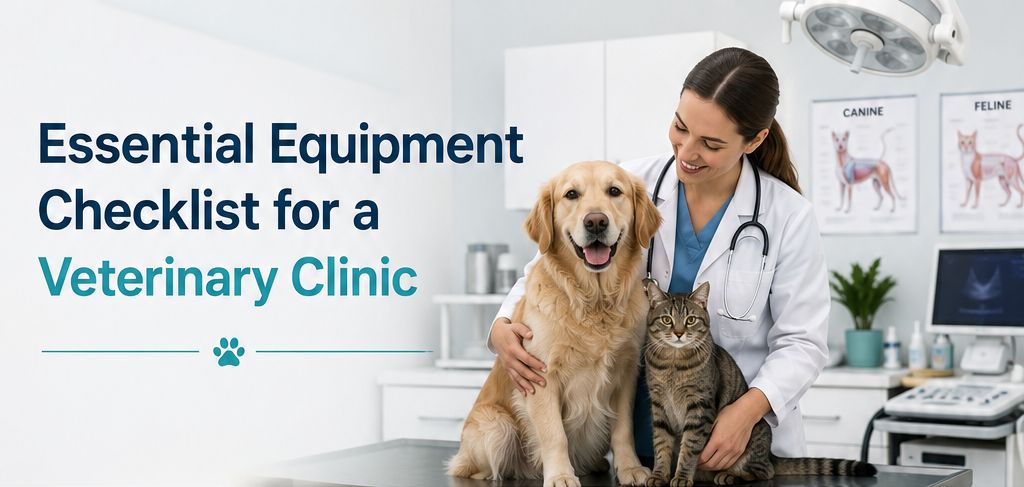
A well-organized examination room allows the veterinary team to work efficiently without leaving the patient repeatedly to locate basic supplies. The exact setup depends on the species treated and the services offered, but every room should support safe handling, routine examination, cleaning and accurate documentation.
Essential furniture and fixed items
- Stable, non-slip examination table that can be disinfected between patients
- Appropriate animal scale or convenient access to a shared scale
- Secure storage for clean supplies and frequently used tools
- Task lighting that supports close visual examination
- Hand-hygiene station or immediate access to one
- Waste container and correctly positioned sharps container where applicable
- Computer, tablet or workstation for records
- Seating arranged to preserve a clear working area
Basic examination tools
| Item | Primary use | Daily readiness check |
| Stethoscope | Heart and lung auscultation | Clean, intact tubing and accessible |
| Thermometer | Body-temperature measurement | Disinfected and supplied with covers or lubricant as required |
| Otoscope | Ear examination | Charged or powered, clean cones available |
| Ophthalmoscope or examination light | Eye assessment | Light source functioning |
| Penlight | Pupil, oral and skin checks | Battery functioning |
| Measuring tape | Wounds, masses and body measurements | Clean and readable |
| Nail trimmers and basic grooming tools | Minor routine procedures | Clean and appropriate sizes available |
Handling and comfort supplies
- Clean towels and washable blankets
- Non-slip mats
- Appropriately sized muzzles
- Slip leads or other clinic-approved restraint tools
- Cat-friendly handling supplies when cats are examined
- Treats or other low-stress rewards when appropriate
Restraint tools should support safe, humane handling. Staff training and patient-specific judgment are more important than simply keeping more restraint devices in the room.
Hygiene and infection-control supplies
- Clinic-approved cleaner and disinfectant
- Disposable gloves in appropriate sizes
- Paper towels or single-use wipes
- Hand sanitizer where suitable
- Laundry container for used textiles
- Leak-resistant waste bags
- Spill supplies for body fluids
- Personal protective equipment required by clinic protocols
The clinic should use written cleaning instructions that define product concentration, surface compatibility and required contact time. AAHA guidance emphasizes patient and staff flow, hand hygiene, cleaning, disinfection and PPE as core parts of a veterinary infection-control program.
Procedure and sample-collection supplies
- Syringes and needles in commonly used sizes
- Alcohol or other approved skin-preparation materials
- Blood-collection tubes and labels
- Urine and fecal sample containers
- Bandage materials
- Gauze and tape
- Lubricant
- Clippers if minor sample preparation is performed in the room
Daily opening checklist
- Confirm the room has been cleaned and no supplies remain from the previous patient.
- Check the examination table, scale and lights.
- Restock essential consumables to the agreed par level.
- Confirm sharps and waste containers have capacity and are correctly positioned.
- Check diagnostic tools, batteries and chargers.
- Confirm the computer or tablet can access the record system.
- Remove expired, damaged or contaminated items.
End-of-day checklist
- Clean and disinfect all patient-contact surfaces.
- Remove waste and replace liners.
- Move used textiles to the designated laundry area.
- Restock only after surfaces are dry and clean.
- Charge portable equipment.
- Report damaged, missing or low-stock items.
Common setup mistakes
- Keeping too much stock in each room, leading to clutter and expired supplies.
- Placing sharps containers where staff must cross the room while holding a used sharp.
- Using surfaces that cannot tolerate the clinic’s disinfectant.
- Allowing personal items, food or drinks in clinical work areas.
- Using different room layouts without a clear reason, making staff search for supplies.
Frequently asked questions
Should every examination room have identical supplies?
A standardized core layout reduces delays and errors. Rooms may still have specialized items for cats, large dogs, dermatology or other services, but essential tools should be stored consistently.
How often should supplies be checked?
High-use items should be checked daily. Expiration dates and slower-moving stock should be reviewed on a planned monthly cycle or more often when required by clinic policy.
Internal links to add
- Veterinary Clinic Equipment Cost in the USA
- Veterinary Clinic Cleaning Schedule
- How to Organize Veterinary Clinic Inventory Without Overstocking
Sources and references
- AAHA – Overview of Infection Control Procedures: https://www.aaha.org/resources/2018-aaha-infection-control-prevention-and-biosecurity-guidelines/procedures-overview/
- AVMA – Personal Protective Equipment: https://www.avma.org/personal-protective-equipment-ppe
- OSHA – Hazard Communication Standard: https://www.osha.gov/laws-regs/regulations/standardnumber/1910/1910.1200