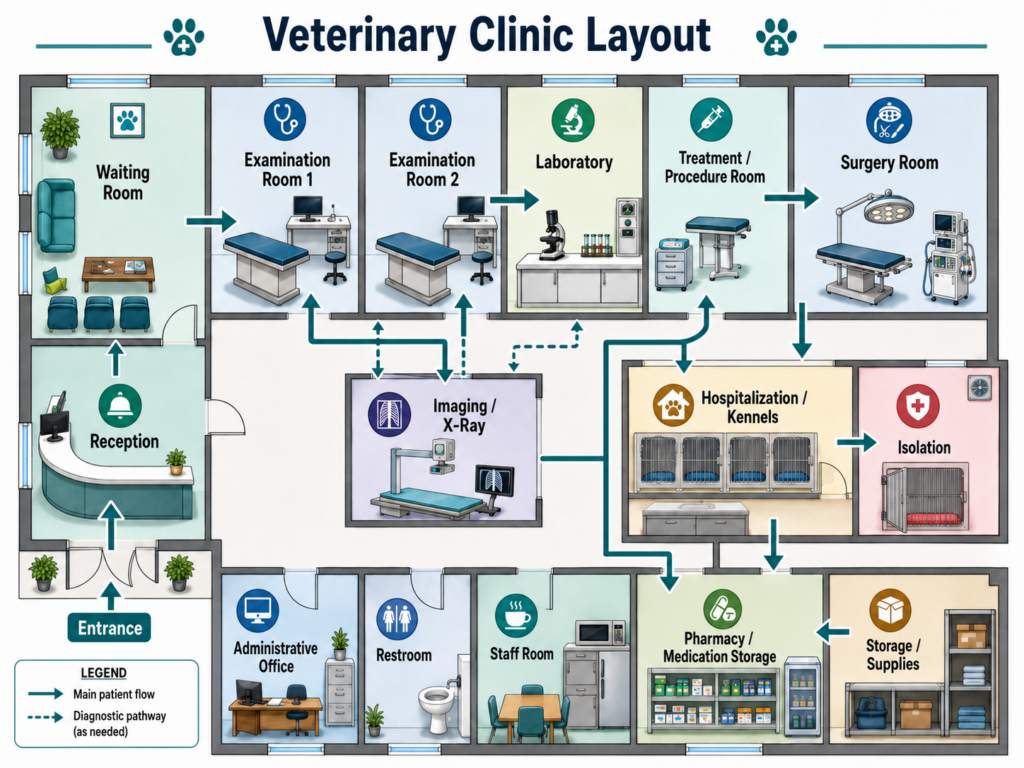
The final 90 days before opening are usually too late for major strategic changes but early enough to identify missing systems, delayed equipment and unsafe workflows. The objective is not simply to finish construction. The clinic must be able to receive a patient, document care, use equipment safely, process payment, clean the facility and respond to an emergency.
Days 90 to 61: Confirm the operating foundation
- Finalize the opening service list and hours
- Confirm local licenses, permits and inspections
- Freeze the room layout and major utility requirements
- Order long-lead equipment
- Select practice-management software and payment systems
- Confirm insurance coverage
- Create a staffing plan and begin recruitment
- Select primary suppliers and backup suppliers
- Draft the emergency and business-continuity plan
Days 60 to 31: Build the systems
- Install computers, networking, secure Wi-Fi and backup systems
- Configure appointments, records, estimates, invoices and reminders
- Receive and inspect furniture and non-clinical equipment
- Write cleaning, disinfection and waste procedures
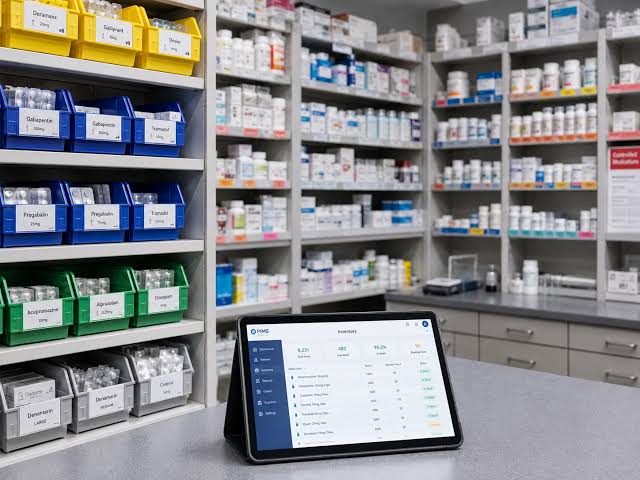
- Create inventory categories and reorder levels
- Draft standard operating procedures for core workflows
- Confirm equipment installation and training dates
- Create client forms and privacy notices
- Plan staff orientation and safety training
Days 30 to 15: Test the clinic
- Install and acceptance-test clinical equipment
- Complete staff training for anesthesia, imaging, laboratory and sterilization systems
- Stock medications and consumables in controlled quantities
- Run mock appointments from check-in to discharge
- Test emergency communication and power-failure procedures
- Confirm cleaning products, dilution instructions and contact times
- Check sharps containers, PPE and spill supplies
- Verify temperature monitoring for relevant storage
Days 14 to 1: Prepare for opening
- Conduct a full facility walk-through
- Remove construction dust and perform final cleaning
- Confirm all devices have manuals, service contacts and warranties
- Review staff roles for opening week
- Check appointment capacity and avoid overbooking
- Confirm referral and emergency contacts
- Test phones, email, online booking and payment processing
- Document unresolved issues and assign owners and deadlines
Opening-day readiness test
| Area | Pass condition |
| Patient flow | A patient can move from arrival to discharge without confusion or unsafe crossings |
| Records | Staff can create, update and retrieve a patient record |
| Payments | Invoices, estimates and payment methods function correctly |
| Equipment | Critical devices have passed installation and staff training |
| Inventory | Essential items are stocked and traceable |
| Cleaning | Written procedures and products are available |
| Emergency response | Staff know who to contact and where emergency supplies are located |
Common startup mistakes
- Opening with too many services before staff and systems are stable
- Scheduling a full appointment load on the first day
- Receiving equipment without formal acceptance testing
- Failing to assign ownership of recurring tasks
- Treating cleaning, inventory and emergency plans as informal knowledge
Frequently asked questions
When should software be selected?
Early enough to configure records, prices, inventory, forms and staff access before training begins. Delaying software selection can force rushed data entry and poorly tested workflows.
How many mock appointments should be performed?
Enough to test different scenarios, including routine consultation, vaccination, laboratory sample, surgery admission, payment problem and emergency referral. The goal is to expose weak handoffs.
Internal links to add
- Veterinary Clinic Equipment Cost in the USA
- Veterinary Clinic Software Features Every Small Practice Needs
- Veterinary Clinic Cleaning Schedule
- How to Organize Veterinary Clinic Inventory
Sources and references
- AAHA – Starting a Veterinary Practice: https://www.aaha.org/resources/starting-a-veterinary-practice/
- AVMA – Emergency Planning for Veterinary Practices: https://www.avma.org/resources-tools/animal-health-and-welfare/disaster-preparedness/emergency-planning-veterinary-practices
- OSHA – Hazard Communication: https://www.osha.gov/laws-regs/regulations/standardnumber/1910/1910.1200