Management

Effective veterinary clinic management combines high-quality animal care with strong organization, clear communication and sound business practices. A clinic may have skilled veterinarians and modern equipment, but without proper management, delays, staff stress, inventory problems and poor client experiences can quickly develop. Successful management should support four main goals: patient safety, staff efficiency, client satisfaction and financial stability.

Create Clear Clinic Procedures

Every veterinary clinic should have written procedures for its most important daily activities. These may include:
  • Patient registration
  • Appointment scheduling
  • Emergency triage
  • Medical record updates
  • Medication handling
  • Surgical preparation
  • Cleaning and disinfection
  • Laboratory sample management
  • Hospitalized patient monitoring
  • Client complaints
  • End-of-day closing duties
Written procedures help staff work consistently and reduce confusion, especially when new employees join the clinic. Protocols should be reviewed regularly and updated when services, equipment or legal requirements change.

Organize Appointments Efficiently

Poor scheduling can create long waiting times, staff overload and rushed consultations. A good appointment system should consider:
  • The type of consultation
  • Expected appointment length
  • Emergency cases
  • Surgical procedures
  • Follow-up visits
  • Staff availability
  • Examination room availability
  • Time needed for cleaning between patients
Routine vaccinations may require less time than complex diagnostic cases. Emergency appointments should have space in the schedule whenever possible. Digital booking systems can also help send reminders and reduce missed appointments.

Improve Patient Flow

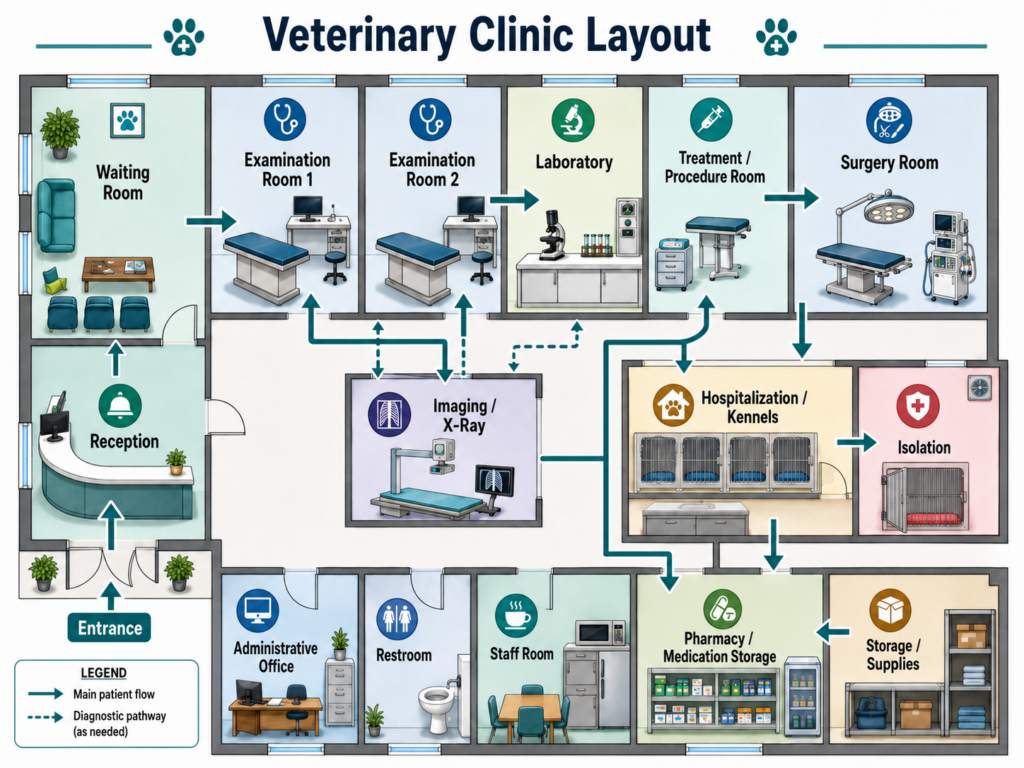
The clinic layout and daily workflow should allow animals to move smoothly through the facility. A typical patient route may be: Reception → Waiting Room → Examination Room → Laboratory, Imaging or Treatment → Pharmacy or Discharge Surgical and hospitalized patients may continue to preparation, surgery and recovery areas. Contagious animals should follow a separate route whenever possible. This helps reduce infection risk and limits contact with other patients.

Define Staff Roles Clearly

Each employee should understand their responsibilities and reporting structure. The team may include:
  • Veterinarians
  • Veterinary technicians or nurses
  • Veterinary assistants
  • Receptionists
  • Practice managers
  • Kennel attendants
  • Laboratory staff
  • Cleaning personnel
Clear role descriptions prevent duplicated work and missed tasks. However, staff should still communicate across departments. Receptionists should know when a case may be urgent, technicians should report changes in hospitalized patients and veterinarians should provide clear treatment instructions.

Hold Regular Staff Meetings

Short, structured meetings can improve communication and prevent operational problems. Meetings may cover:
  • Difficult cases
  • Patient safety concerns
  • Scheduling issues
  • Equipment problems
  • Inventory shortages
  • Client feedback
  • Upcoming training
  • Changes in clinic procedures
Daily briefings may be useful in busy clinics, while smaller practices may hold weekly meetings. The goal should be to solve problems, not create unnecessary meetings.

Maintain Accurate Medical Records

Complete and accurate medical records are essential for continuity of care. Records should include:
  • Patient history
  • Examination findings
  • Diagnostic results
  • Treatments
  • Medication doses
  • Surgical notes
  • Vaccination information
  • Client instructions
  • Follow-up recommendations
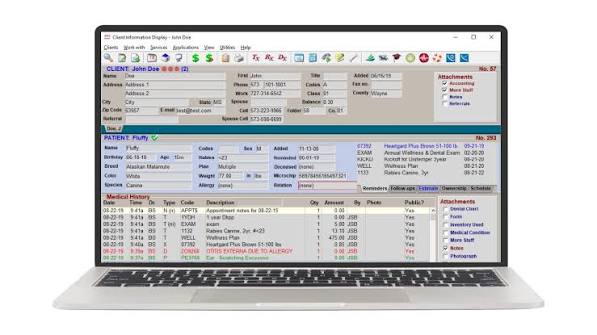
Digital records can make information easier to search, share and back up. Access should be limited to authorized staff, and the clinic should follow applicable data-protection rules.

Manage Inventory Carefully

Veterinary clinics depend on a reliable supply of medications, vaccines, laboratory materials and disposable products. Inventory management should include:
  • Minimum stock levels
  • Regular stock counts
  • Expiration-date checks
  • Temperature monitoring
  • Secure medication storage
  • Supplier records
  • Purchase approval procedures
  • Tracking of high-cost items
Using older stock before newer stock can help reduce waste, provided the products remain safe and within their expiration dates. Controlled medications should be documented according to local regulations.

Control Clinic Finances

Financial management is necessary for the clinic to maintain staff, equipment and medical services. Important financial tasks include:
  • Creating an annual budget
  • Monitoring income and expenses
  • Reviewing service prices
  • Tracking unpaid invoices
  • Managing payroll
  • Controlling purchasing costs
  • Planning equipment investments
  • Maintaining emergency reserves
Clinic prices should reflect the real cost of staff time, equipment, medications and facility operations. Financial reports should be reviewed regularly, not only at the end of the year.

Deliver Excellent Client Service

Pet owners judge a clinic not only by medical outcomes but also by communication, waiting times and staff behavior. Good client service includes:
  • Friendly greetings
  • Clear explanations
  • Transparent pricing
  • Realistic treatment expectations
  • Written home-care instructions
  • Appointment reminders
  • Follow-up communication
  • Respectful complaint handling
Medical terms should be explained in language clients can understand. When several treatment options exist, veterinarians should explain the benefits, risks and costs of each option without pressuring the owner.

Establish an Emergency Plan

Every clinic should be prepared for medical and non-medical emergencies. The emergency plan should cover:
  • Critical patient response
  • Staff responsibilities
  • Emergency medication access
  • Oxygen and resuscitation equipment
  • Fire and evacuation procedures
  • Electrical failure
  • Water supply interruption
  • Data loss
  • Equipment malfunction
  • Transfer to an emergency hospital
Emergency equipment should be checked routinely. Staff should know where it is stored and how to use it.

Prioritize Infection Control

Infection prevention should be part of every department. Important measures include:
  • Hand hygiene
  • Cleaning schedules
  • Surface disinfection
  • Proper waste disposal
  • Instrument sterilization
  • Isolation procedures
  • Personal protective equipment
  • Laundry separation
  • Safe sharps disposal
The clinic should use products that are appropriate for veterinary environments and follow the correct contact times for disinfectants.

Invest in Staff Training

Veterinary medicine, equipment and client expectations continue to change. Ongoing training may focus on:
  • Clinical skills
  • Anesthesia monitoring
  • Emergency response
  • Animal handling
  • Infection control
  • Client communication
  • Workplace safety
  • New software
  • Equipment use
  • Leadership development
Training improves service quality and can increase staff confidence and retention. New employees should receive a structured introduction instead of learning only through observation.

Support Staff Well-Being

Veterinary work can be physically and emotionally demanding. Clinic management should monitor workload and create a respectful working environment. Useful measures may include:
  • Fair scheduling
  • Adequate breaks
  • Clear communication
  • Support after difficult cases
  • Reasonable overtime policies
  • Safe staffing levels
  • Conflict-resolution procedures
  • Recognition of good performance
Burnout can affect employee health, patient safety and client service. A supportive workplace is therefore an important management responsibility.

Use Technology Wisely

Technology can improve efficiency when it is selected and implemented carefully. Useful systems may include:
  • Practice-management software
  • Digital medical records
  • Online appointment booking
  • Automated reminders
  • Inventory tracking
  • Digital imaging
  • Electronic laboratory integration
  • Payment systems
  • Secure cloud backups
  • Client communication platforms
The clinic should also protect its systems with strong passwords, access controls and regular data backups.

Monitor Performance

Clinic managers should track a small number of useful performance indicators. Examples include:
  • Number of appointments
  • Waiting times
  • Missed appointments
  • Average invoice value
  • Inventory waste
  • Client complaints
  • Follow-up compliance
  • Surgical complication rates
  • Staff turnover
  • Revenue and expenses
These indicators can reveal problems before they become more serious. Performance data should be used to improve systems, not to create unnecessary pressure on employees.

Collect and Use Client Feedback

Client feedback can help identify problems that staff may not notice. Feedback may be collected through:
  • Short surveys
  • Follow-up emails
  • Online reviews
  • Direct conversations
  • Complaint records
Repeated concerns about waiting times, unclear prices or communication should be investigated. Positive feedback can also show which services and staff behaviors clients value most.

Plan for Growth

A clinic should not expand services without considering space, staffing, equipment and demand. Before adding new services, management should review:
  • Expected patient volume
  • Staff qualifications
  • Equipment costs
  • Legal requirements
  • Available rooms
  • Training needs
  • Ongoing maintenance costs
  • Financial return
Controlled growth is usually safer than expanding too quickly.

Final Considerations

Effective veterinary clinic management requires more than supervising employees. It involves creating reliable systems that support medical care, communication, safety and financial stability. The strongest clinics usually have clear procedures, organized scheduling, accurate records, trained staff, controlled inventory and respectful client communication. Management should be reviewed continuously. Small improvements in workflow, staff support and patient organization can produce significant long-term benefits for the clinic, its employees and the animals it serves.  
Scroll to Top