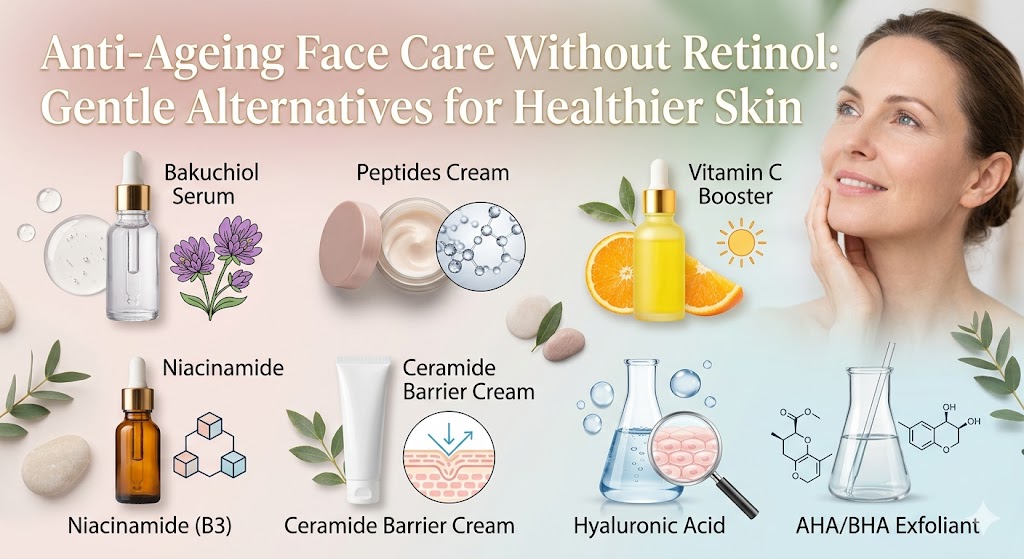
Retinol has long been one of the most talked-about ingredients in anti-ageing skincare. Many people use it to help reduce the appearance of fine lines, wrinkles, and uneven skin texture. However, not everyone tolerates retinol well. For some individuals, especially those with sensitive skin, it may cause dryness, redness, irritation, and increased sensitivity.
Fortunately, modern skincare offers a variety of alternatives that can support healthy-looking skin without the discomfort sometimes associated with retinol. By focusing on hydration, gentle exfoliation, and antioxidant protection, it is possible to build an effective anti-ageing routine that is suitable for a wider range of skin types.
Why Some People Avoid Retinol
Retinol is a form of Vitamin A that encourages faster skin cell turnover. While many users see positive results, others experience side effects, particularly during the adjustment period.
Common concerns include:
- Dryness and flaking
- Temporary redness
- Skin irritation
- Increased sensitivity to sunlight
- Discomfort for sensitive skin types
Because of these concerns, many skincare users seek gentler alternatives that can support skin health while minimizing irritation.
Key Ingredients in Retinol-Free Skincare
A number of ingredients are commonly used in anti-ageing products that do not contain retinol. These ingredients focus on hydration, skin renewal, and environmental protection.
Hyaluronic Acid
Hyaluronic acid is one of the most popular moisturizing ingredients in skincare. It naturally occurs within the body and helps retain water within the skin.
Benefits may include:
- Improved hydration
- A smoother appearance
- Reduced visibility of dehydration lines
- Enhanced skin softness
Well-hydrated skin often appears healthier and more radiant.
Plant-Based Alpha Hydroxy Acids (AHAs)
AHAs are exfoliating ingredients that help remove dead skin cells from the surface of the skin. Plant-derived AHAs are commonly sourced from fruits and other natural ingredients.
Potential benefits include:
- Brighter-looking skin
- Improved texture
- A smoother surface appearance
- Support for natural skin renewal
Gentle exfoliation can help reveal fresher-looking skin without aggressive treatments.
Botanical Peptides and Plant Extracts
Many skincare formulations include plant-based peptides and extracts that help support the skin’s natural functions.
These ingredients are often used to:
- Improve the appearance of firmness
- Support skin elasticity
- Reduce the appearance of fine lines
- Enhance overall skin texture
Antioxidants
Environmental factors such as pollution and ultraviolet (UV) exposure can contribute to visible signs of skin ageing. Antioxidants help protect the skin from oxidative stress.
Popular antioxidants include:
- Green tea extract
- Vitamin C
- Seaweed extracts
- Plant-derived polyphenols
These ingredients are widely used to support healthier-looking skin and maintain a more youthful appearance.
Building a Retinol-Free Anti-Ageing Routine
Creating an effective skincare routine does not require complicated products or harsh ingredients. Consistency is often more important than using aggressive treatments.
Step 1: Gentle Cleansing
Start with a mild cleanser that removes dirt, oil, and makeup without stripping the skin’s natural moisture barrier.
A gentle cleanse helps prepare the skin for the products that follow.
Step 2: Regular Exfoliation
Using a mild exfoliating product one to three times per week can help improve skin texture and brightness.
Avoid over-exfoliating, as excessive exfoliation may cause irritation.
Step 3: Apply Targeted Treatments
Serums containing hydrating ingredients, antioxidants, or peptides can help address specific concerns such as dryness, uneven texture, or the appearance of fine lines.
Step 4: Moisturize Daily
Moisturizers help lock in hydration and support the skin’s protective barrier.
Choose a formula suitable for your skin type:
- Lightweight gels for oily skin
- Balanced lotions for combination skin
- Rich creams for dry skin
Step 5: Use Sunscreen Every Day
Daily sun protection is one of the most important aspects of anti-ageing skincare.
Broad-spectrum sunscreen helps protect against UV damage, which is one of the leading causes of premature skin ageing.
Lifestyle Habits That Support Healthy Skin
Skincare products are only one part of maintaining healthy-looking skin. Daily habits can also play an important role.
Helpful practices include:
- Drinking adequate water
- Eating a balanced diet
- Getting sufficient sleep
- Managing stress levels
- Avoiding excessive sun exposure
- Not smoking
These habits support overall wellness and may contribute to healthier skin over time.
Frequently Asked Questions
Is retinol necessary for anti-ageing skincare?
No. While retinol is a popular ingredient, many people achieve positive results using alternative ingredients focused on hydration, gentle exfoliation, and antioxidant protection.
Can sensitive skin benefit from retinol-free products?
Yes. Individuals with sensitive skin often prefer gentler formulations that are less likely to cause irritation or dryness.
How long does it take to see improvements?
Results vary depending on the individual, their skin type, and the products used. Consistency is generally important for achieving noticeable improvements over time.
Are natural ingredients always better?
Not necessarily. Both natural and synthetic ingredients can be effective. The best choice depends on skin type, tolerance, and personal preferences.
Conclusion
Retinol-free anti-ageing skincare can be an excellent option for individuals seeking a gentler approach to maintaining healthy, youthful-looking skin. Ingredients such as hyaluronic acid, plant-based exfoliants, peptides, and antioxidants offer a variety of benefits that support hydration, skin renewal, and environmental protection.
By combining appropriate skincare products with healthy lifestyle habits and daily sun protection, it is possible to build an effective anti-ageing routine that supports long-term skin health without relying on retinol.