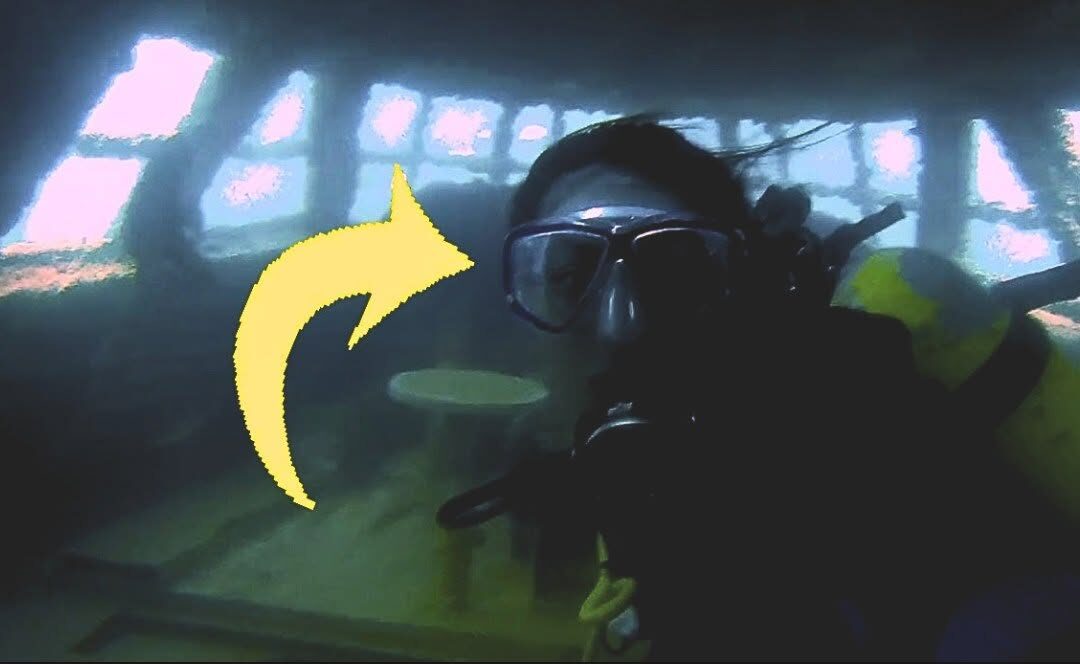
When a deep-sea diver descended into the clear waters of the Persian Gulf north of Bahrain, he noticed something unusual emerging from the blue. At first glance, it appeared to be an enormous cylindrical object resting on the seabed. Surrounded by schools of tropical fish and partially obscured by the water’s haze, the structure seemed almost unreal.

As the diver moved closer, the mystery slowly revealed itself. What looked like a giant metal tube was not a natural formation at all. It was one of the most remarkable attractions ever intentionally placed beneath the sea—a retired Boeing 747 passenger aircraft resting at the heart of Bahrain’s ambitious underwater tourism project.
A New Attraction Beneath the Waves
Officially opened in 2019, Bahrain’s underwater park covers more than one million square feet and was designed to attract divers, marine enthusiasts, photographers, and travelers from around the world. The project quickly gained international attention for its unique combination of tourism, environmental restoration, and cultural storytelling.
Located in the Persian Gulf between Saudi Arabia and Qatar, Bahrain has spent years investing in tourism as part of its broader economic diversification efforts. While the country is often associated with its modern skyline and financial sector, it also has a rich history stretching back thousands of years.
Ancient Bahrain was once home to the Dilmun civilization, an important trading hub that connected Mesopotamia with the Indian subcontinent. For generations, the kingdom was also famous for its natural pearl industry, which played a central role in the local economy long before the discovery of oil.
The underwater park was designed with this heritage in mind. Rather than creating a simple dive site, planners envisioned a destination that would blend Bahrain’s cultural history with marine conservation and adventure tourism.
Preserving History Below the Surface
Among the attractions within the underwater park is a replica of a traditional Bahraini pearl merchant’s house. The structure pays tribute to a period when pearl diving was one of the region’s most important industries.
For centuries, Bahraini pearls were highly prized across international markets for their quality and beauty. Divers would spend long hours searching the seabed for oysters, often under extremely challenging conditions. The replica serves as a reminder of this important chapter in the nation’s history and helps visitors understand the connection between Bahrain and the sea.
The park also includes artificial reef structures designed to encourage marine life to flourish. Such projects have become increasingly common around the world as scientists and conservationists explore ways to create habitats for fish, corals, and other sea creatures.
The Boeing 747 That Found a Second Life
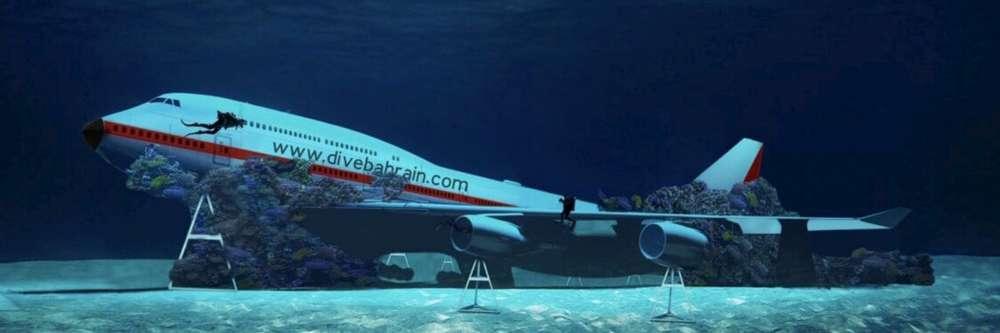
Despite these attractions, the centerpiece of the underwater park is undoubtedly the massive Boeing 747-200 resting on the ocean floor.
Measuring roughly 230 feet in length with a wingspan approaching 200 feet, the aircraft is one of the largest airplanes ever intentionally submerged for recreational diving purposes. Positioned at a depth accessible to experienced divers, it has become the park’s most photographed feature.
The aircraft originally entered service in the early 1980s and spent years operating as both a passenger and cargo plane. After serving multiple operators throughout its career, it was eventually retired from active aviation use.
Rather than being dismantled for scrap, the aircraft was purchased and prepared for a carefully planned underwater installation. The operation required extensive logistical planning due to the sheer size and weight of the jumbo jet.
Today, what once carried travelers through the skies now serves a completely different purpose beneath the sea.
Environmental Questions and Careful Preparation
Large-scale artificial reef projects often generate debate among environmental experts, and Bahrain’s Boeing 747 was no exception.
Some specialists raised concerns about the long-term effects of placing such a large metal structure in a marine environment. Materials commonly found in aircraft—including metals, coatings, wiring, and other components—can potentially affect surrounding ecosystems if not properly removed.
To address these concerns, project organizers reported that the aircraft underwent an extensive cleaning and preparation process before submersion. Fuel residues, hydraulic systems, electrical components, plastics, rubber materials, and other potentially harmful substances were removed. The aircraft was then cleaned and inspected to reduce environmental risks.
Such preparation is considered essential for artificial reef projects, helping ensure that structures can support marine life while minimizing ecological impact.
A New Home for Marine Life
One of the most fascinating aspects of underwater structures is how quickly nature adapts to them.
Over time, surfaces become colonized by algae, small organisms, and marine invertebrates. These organisms attract fish and other species, gradually transforming a man-made object into a functioning underwater habitat.
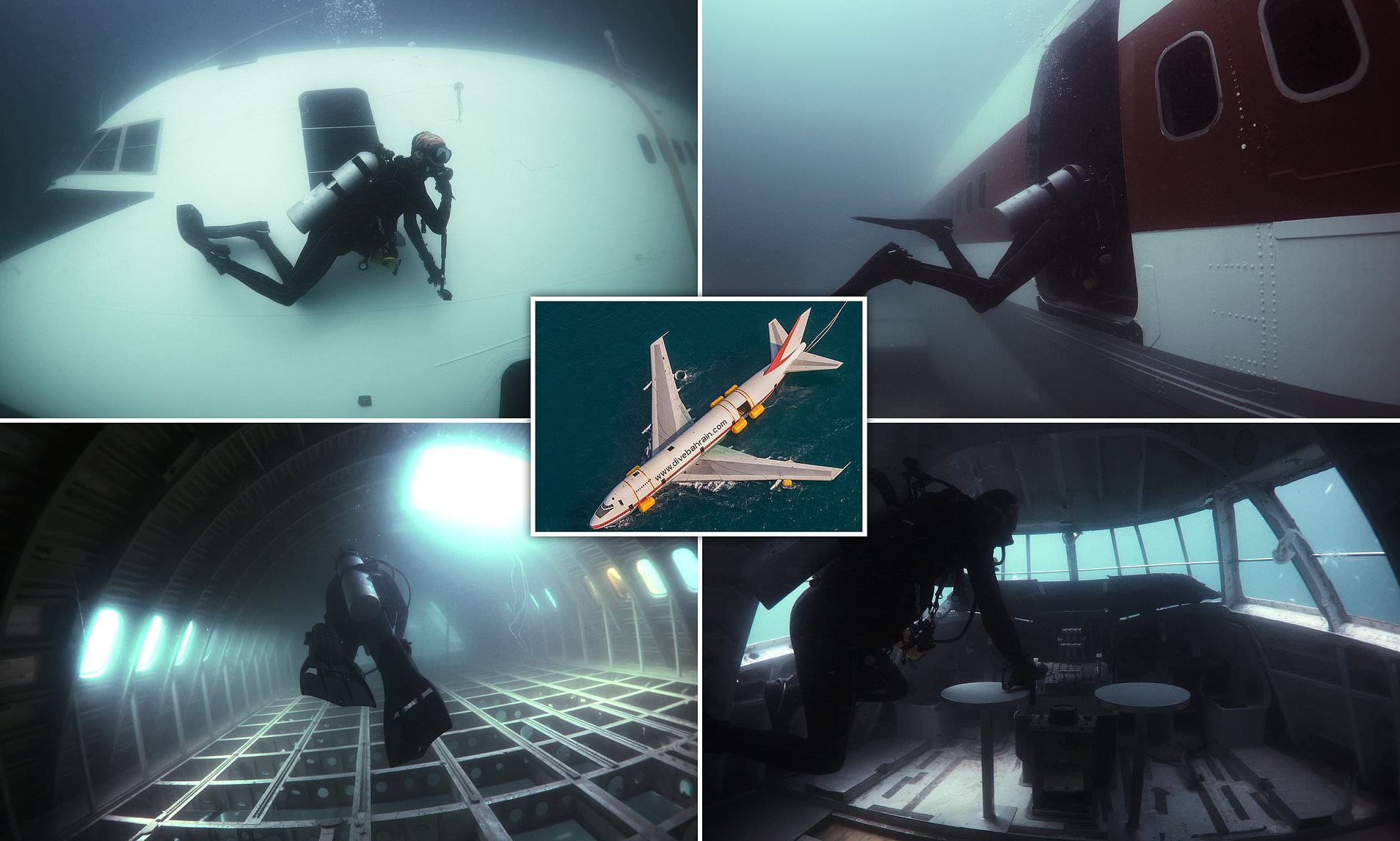
Images captured by divers in Bahrain show fish swimming through the aircraft’s empty cabin and around its exterior. Sections of the plane are already blending into the surrounding marine environment, demonstrating how artificial structures can become part of underwater ecosystems.
Inside, the aircraft presents a surreal scene. The seats and equipment have been removed, leaving behind a vast metal framework. Corridors once used by passengers now serve as passageways for marine life. Areas that once echoed with conversation and engine noise are now silent, broken only by the movement of water and fish.
An Unforgettable Underwater Landmark
The story of Bahrain’s sunken Boeing 747 is more than just a tale of an old aircraft finding a new purpose. It reflects a broader effort to combine tourism, environmental awareness, and cultural heritage in a unique and memorable way.
For divers, the experience offers the rare opportunity to explore a full-size jumbo jet beneath the sea. For travelers, it provides a glimpse into one of the world’s most unusual attractions. And for marine researchers, it serves as an ongoing example of how artificial structures can interact with underwater ecosystems.
Decades after carrying passengers across continents, the Boeing 747 has embarked on its final journey—not through the skies, but beneath the waves, where it continues to capture the imagination of visitors from around the world.